Most advice for new founders assumes a check is coming. Pitch decks, term sheets, "how to talk to investors," a whole genre written for people raising money. But a growing number of builders aren't raising anything. They're shipping a bootstrapped SaaS on nights and weekends, funding it with their own savings and their first ten customers, and keeping every share of it.
If that's you, the funding playbook is the wrong book. You don't need a round. You need a system: a stack of tools and decisions that turns "no runway" from a handicap into the thing that actually makes you ship. This is the micro SaaS path: small, focused, profitable without outside money.
This is that stack. Not a definition you can get from any finance site in ten seconds, but the real toolkit, phase by phase, that a solo founder uses to build a bootstrapped startup and get it out the door.

What is a bootstrapped startup?
A bootstrapped startup is a company built without outside investment. It's funded by the founder's own money and early customer revenue instead of venture capital or angel funding. The founder keeps full ownership and control, and the business has to reach profitability on its own resources rather than on a runway of someone else's cash.
That's the whole definition, and the search results are full of it. J.P. Morgan puts it plainly through DeMarcus Williams, their MD of Startup Banking: "Bootstrapping means there's no equity dilution. You are the sole owner of the company." Investopedia and Stripe say the same thing in different words.
So we'll leave the definition there. The interesting question isn't what a bootstrap startup is. It's how you actually run one without losing two years to a half-built product nobody asked for.
Why constraints make you more likely to ship
Here's the part the funding-optional crowd gets right: a tight constraint forces a decision you'd otherwise put off.
When you raise a round, you buy time. Eighteen months of runway means eighteen months before the market forces a decision. That sounds like a gift. In practice it's how a lot of funded teams end up polishing features for a year before anyone outside the building has used the product.
A bootstrapped startup doesn't get that luxury, and that's the advantage. No runway means every week has to move you toward revenue, which means you have to scope ruthlessly. You can't afford to build the analytics dashboard before you've confirmed anyone wants the core thing. The constraint makes the call for you: ship the smallest version that's worth paying for, then learn.
I want to be honest about this, because bootstrapping has a hype problem. It doesn't make you win more often. Founder Paul O'Brien has a sharp piece arguing that the "bootstrappers succeed more" data is mostly survivorship bias, and he's right. Bootstrapping doesn't raise your odds of building something great. It just removes the cushion that lets you delay finding out whether you have. That's the real benefit. You learn faster because you have to.
The bootstrapped startup toolkit, by phase
A bootstrapped startup runs in four phases: validate, build, launch, grow. Each phase has a job and a small set of tools that do that job without burning money you don't have. Here's the stack.

Phase 1: Validate before you write a line of code
The most expensive thing a solo founder can do is build the wrong thing well. Validation is how you avoid it, and it costs nothing but honesty.
- A structured validation pass. Talk to real people who have the problem before you build the solution. The hard part isn't talking. It's asking questions that don't lead the witness. FoundStep's idea validation checklist walks through this in about twenty minutes: who has the problem, how painful it is, and whether they'd actually pay to solve it.
- A landing page test. One page describing the product as if it exists, with an email capture. If you can't get strangers to give you an email for the promise, the product won't sell either. Cheap to build, brutal to read, worth every minute.
- Customer discovery in public. The communities where your users already complain, a subreddit, a Discord, an indie forum, are free research. Read the threads where people describe the problem in their own words. You'll write better copy and build a better v1.
Skip this phase and you've funded your own failure with the most expensive currency you have: months.
Phase 2: Build and ship the locked scope, not the dream
Building is where bootstrapped startups quietly die. Not from bad code, but from scope creep. You sit down to build three features and surface six months later maintaining twelve.

- Agentic coding tools. Cursor, Claude Code, and Windsurf can build features in minutes that used to take a day. For a solo founder with no team, that evens the odds. But agentic tools cut both ways: if they can build anything in minutes, scope creep runs at machine speed too. Speed without a plan is just faster wandering.
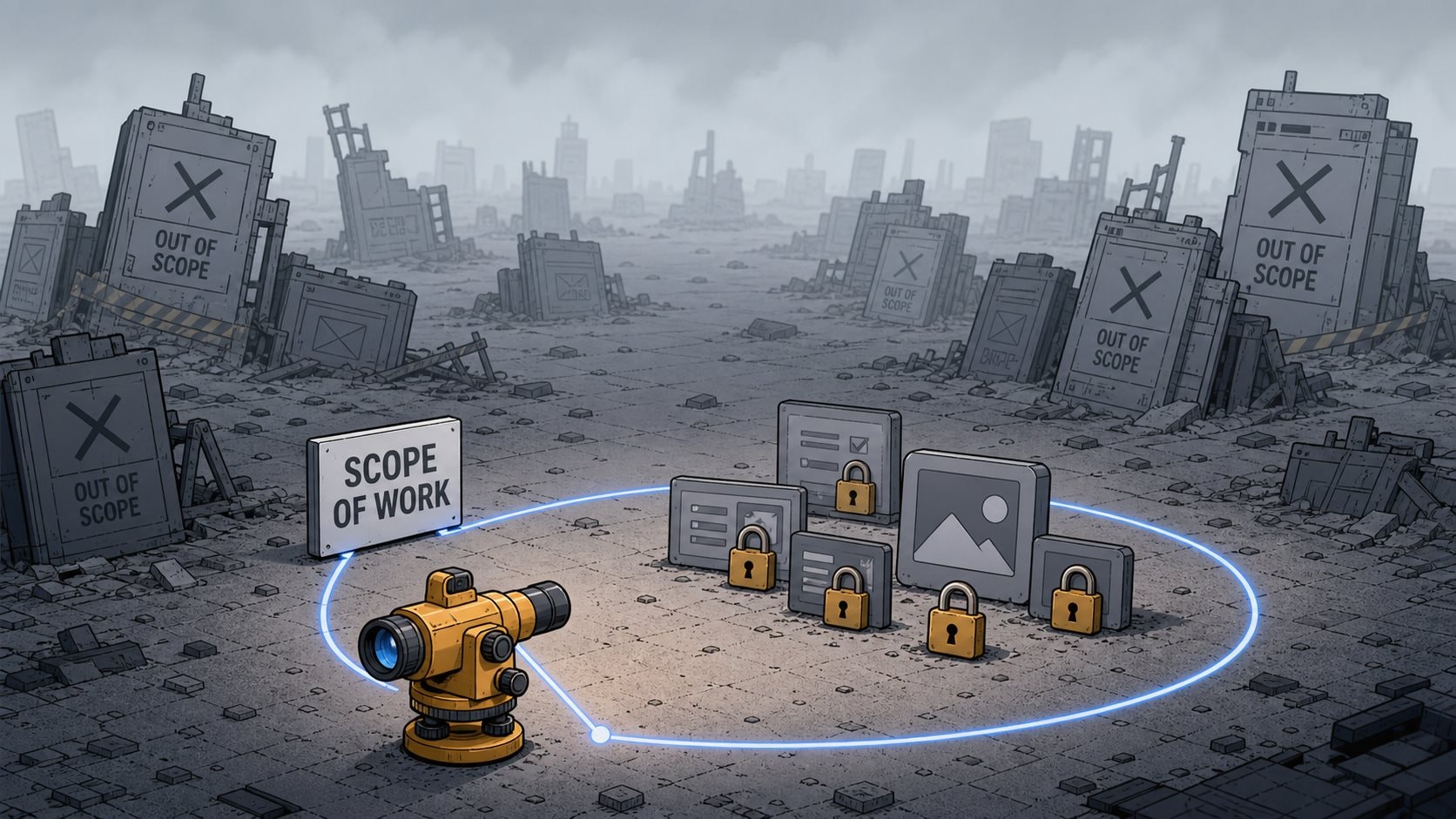
- A locked scope. This is the tool everyone skips. Before you open a terminal, decide the three to five features that ship in v1 and write down everything you're not building. A one-page PRD captures this in a format you can hand to your AI coding agent. FoundStep's feature planning exists for exactly this: define the MVP, lock it, and build only what's locked. When the "just one more feature" urge hits at 11pm, the call was already made when you were thinking clearly.
- A version horizon. Every good idea you cut from v1 goes on a list for later, not into the current build. You keep the idea without paying for it now.
Every bootstrap startup I've seen actually ship had this in common: they built less than they wanted to, on purpose.
Phase 3: Launch where the people already gather
You don't need a PR budget. You need to show up where your users already are.
- Product Hunt for the launch-day spike and the backlink.
- Indie Hackers for founders who get the bootstrapped path and will actually try your thing.
- The communities you validated in. Go back to the subreddit or Discord where you did discovery, now with a real product and an honest "I built this, here's what it does."
- A launch artifact. A clear, shareable summary of what shipped and why. FoundStep calls these Ship Cards, a record of what you put out, so launching becomes a habit instead of a one-time event you dread.
Launch isn't a moment. For a bootstrapped startup it's a habit you build by doing it repeatedly, small, in public.
Phase 4: Grow on channels that compound, not paid spend
With no ad budget, you grow on channels that keep working for free.
- SEO. A few articles that answer the exact questions your buyers search will out-earn paid ads over a year, because they keep working after you stop writing. (You're reading one right now.)
- Community. Being genuinely useful in the places your users gather builds trust that no ad buys.
- Build in public. Sharing real progress, real numbers, and real failures turns your build into content and your followers into your first customers. Half the bootstrapped startup success stories you've read started as a "30 days post-launch, honest numbers" post.
The bootstrapped mindset: ship the ugly MVP
Tools don't ship products. Decisions do. And the decision that matters most is this: launch the embarrassing version.

Every founder wants to launch the polished thing. The bootstrapped reality is that you launch the ugly, narrow, slightly broken version, and then you fix it with real feedback from real users instead of guesses from your own head. The version you're embarrassed by is the one that teaches you what to build next. The polished version you delayed for three months teaches you nothing, because nobody's used it.
Reid Hoffman's line gets quoted to death, but it earns the repetition: if you're not embarrassed by your first release, you launched too late. For a bootstrapped startup with no runway to waste, "too late" isn't a vibe. It's months of savings spent building in the dark.
Bootstrapped startup examples worth studying
The best bootstrapped startup examples aren't the unicorns. They're the solo founders posting honest numbers in real time. Reddit's r/EntrepreneurRideAlong and r/micro_saas are full of "30 days post-launch as a solo bootstrapped founder" threads where founders share what worked, what flopped, and the actual revenue. That's a more useful education than any case study a payment company publishes.
For the philosophy behind it, Ash Maurya (who wrote Running Lean) makes the case in "Why Bootstrapping Is Still the Best Way to Startup": bootstrap until you've found problem/solution fit, then decide whether you even need outside money. Most founders who reach traction discover they don't.
The thread connecting all of them: they shipped small, listened hard, and let revenue, not a runway, fund the next step.
Where FoundStep fits in the stack
Everything above has tools for the making: editors, launch platforms, communities. What the bootstrapped stack usually lacks is a layer for the deciding: what to build, what to cut, and how to not break your own scope when you're tired and excited.
That's the gap FoundStep fills. It's the discipline layer for solo founders: validate the idea (Phase 1), lock the MVP scope before you build (Phase 2), and ship from a specific plan instead of a vague vision. There's even an unlock history and a Shame History, a built-in record of when you stuck to scope and when you didn't, because at zero runway every sprint has to count.
When someone else's money is funding the runway, you can afford to wander. When it's yours, the system that keeps you on scope isn't optional. It's the difference between shipping and joining the pile of half-built repos.
Frequently asked questions
What is a bootstrapped startup?
A bootstrapped startup is a company funded by the founder's own money and early customer revenue instead of venture capital or angel investment. The founder keeps full ownership and full control, and the business has to become profitable on its own resources rather than on outside cash.
Is bootstrapping a good or bad strategy?
It depends on what you're building. For a software product a solo founder can build and sell directly, which is most bootstrapped SaaS, it's often the better path. You keep control, you're forced to reach revenue fast, and you don't spend months fundraising instead of building. For capital-heavy businesses that need scale before revenue, bootstrapping can starve a good idea. Be honest about which one you have.
Can you bootstrap a startup with no money?
Close to it. You can't bootstrap with zero, since you'll spend something on hosting and a domain, but you can start with a few hundred dollars if you build the product yourself. The real cost of a bootstrapped startup isn't cash. It's your time, and the discipline to spend that time on the right scope.
Is bootstrapping still viable in 2026?
More than ever. Agentic coding tools let one person build what used to take a small team, which removes the main reason founders raised early money: to afford engineers. The cost of building has dropped faster than the cost of running has risen. That math favors the bootstrapper.
Why do most startups fail?
Usually because they built something nobody wanted, or ran out of money before finding out. A bootstrapped startup's constraints protect against both. With no runway you're forced to validate before building and to reach revenue early, which is exactly when most failures get caught in time to fix them.
You don't need a round. You need a system.
The myth that you need funding to start is the most expensive thing a new founder can believe. It delays the launch, outsources the validation, and trades your ownership for a cushion you don't actually need.
A bootstrapped startup is built on the opposite bet: that constraints make you decide faster and scope tighter, so the thing actually ships. The tools are cheap and mostly free. The hard part is the discipline. Validate before you build, lock your scope before you open the editor, and launch the version you're a little embarrassed by.
Start your MVP plan in FoundStep →
Or start where every bootstrapped startup should, with the free idea validation checklist. Twenty minutes now saves you three months of building the wrong thing.