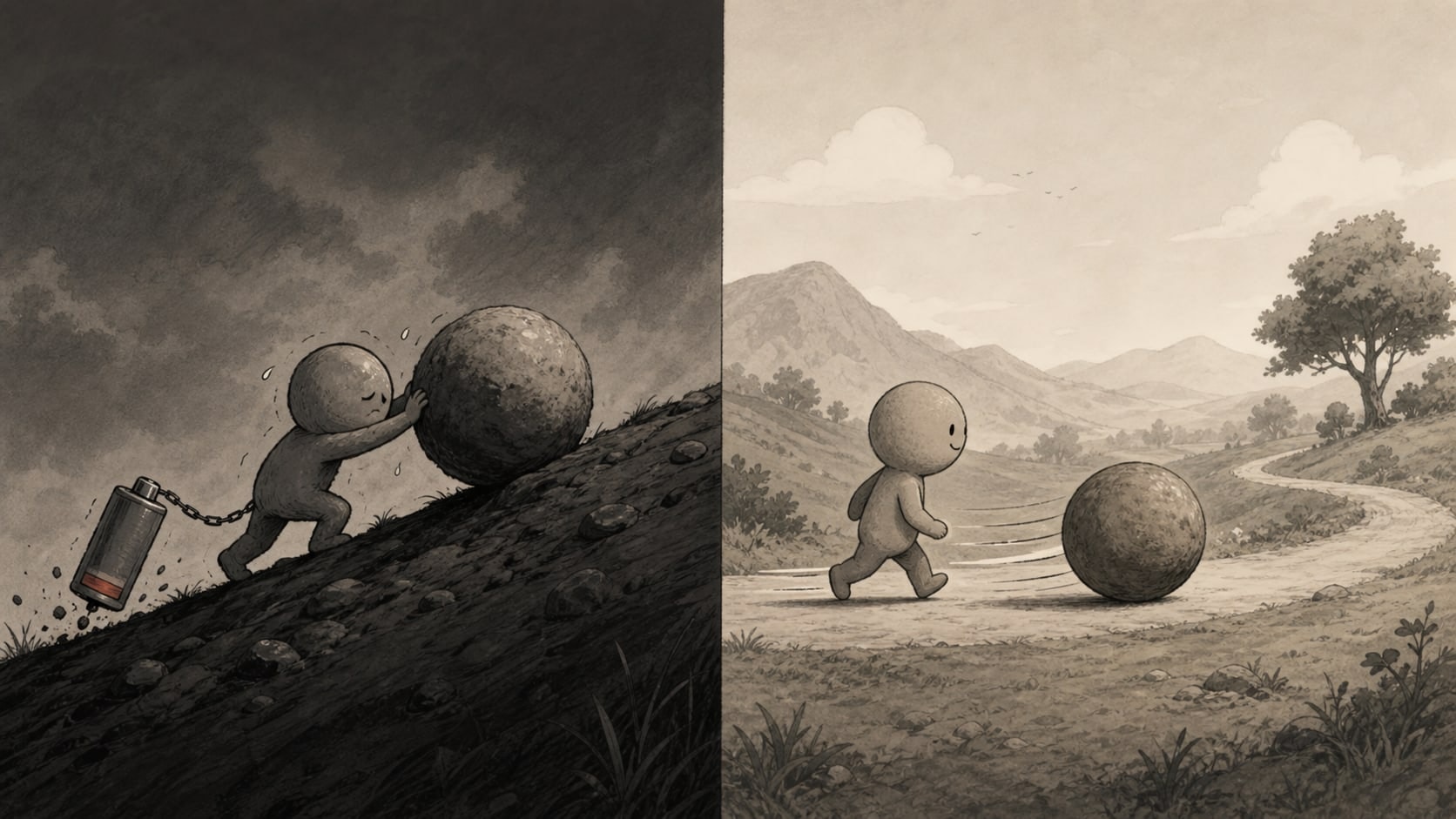
You don't have a discipline problem. You have a system that needs discipline to run, which is a different thing, and a much more fixable one.
Almost every productivity system sold to you assumes a version of you that doesn't exist on a Tuesday at 4pm: rested, motivated, ready to process the inbox and run the weekly review. That version shows up maybe twice a week. The other five days, the system sits there waiting for willpower you don't have, and slowly rots.
This is a guide to the opposite kind of system. One that runs on structure instead of motivation, so it keeps working on the days you're tired, distracted, or bored of the project. If you're a builder who starts ten things and finishes one, this is the part you've been missing.
What a productivity system actually is
A productivity system is a repeatable way to decide what to work on next and actually do it, without re-deciding from scratch every day.
That's it. Not an app, not a method with a famous name, not a color-coded board. A system answers one question on your behalf: what do I do right now? The good ones answer it the same way whether you're sharp or fried, because the answer lives outside your head.
This is where most "best productivity system" lists go wrong. They hand you ten named methods (GTD, Pomodoro, the Eisenhower Matrix, time blocking, Kanban) and tell you to pick one. But the method is the easy part. The hard part is keeping any of them alive once the novelty wears off. And that depends entirely on how much of your willpower the system quietly spends.
Why willpower-based productivity falls apart
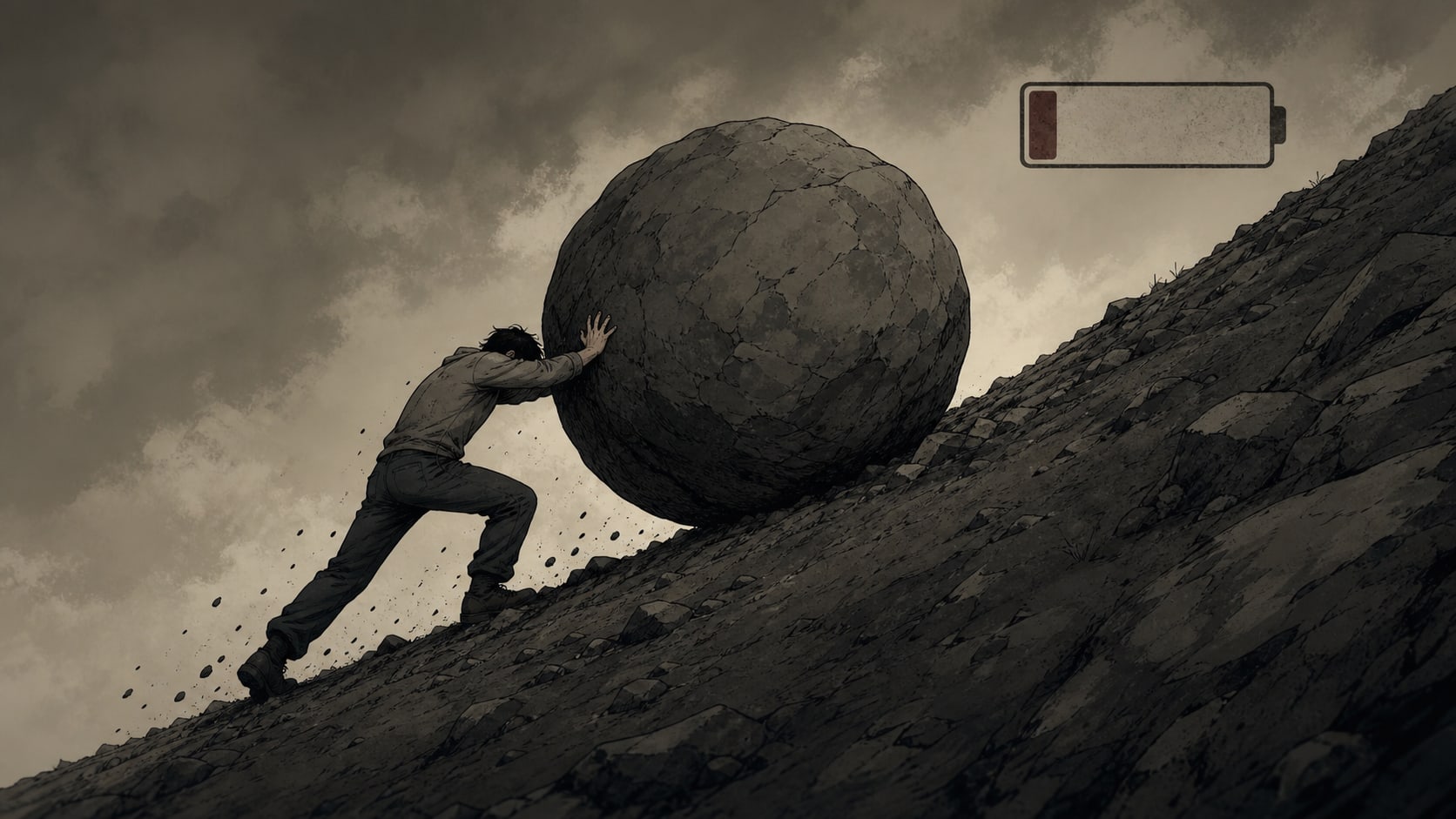
Willpower is a terrible foundation because it's the first thing to go.
Every system has a maintenance cost: the inbox you have to process, the board you have to tidy, the Getting Things Done weekly review you're supposed to run religiously. On a good day you pay it gladly. The problem is the bad day. You skip the review once because you're slammed. Nothing breaks immediately, so you skip it again. Two weeks later the system is a graveyard of stale tasks you don't trust, and you're back to working off a mental list and vibes.
The deeper reason is decision fatigue. Every time you open your task manager and stare at forty items, you spend energy just deciding what to touch first. Do that at 9am and you're fine. Do it at 4pm after six hours of context switching and you'll pick the easiest, lowest-value task, or you'll bounce to your phone. The system asked you to make a hard decision at the exact moment you were worst equipped to make it.
So the test for any system isn't "does it work when I'm motivated." Everything works when you're motivated. The test is: does it still run on the day you have no willpower left? If the answer is no, you don't have a system. You have a hobby that requires you to be a certain mood.
Context switching is the tax you don't see
There's a hidden line item draining your day, and it's not laziness. It's context switching.
Every time you jump from code to Slack to email to a new idea, your brain pays a reload cost to rebuild what it was holding. UC Irvine researcher Gloria Mark found it takes about 23 minutes to fully refocus after an interruption. You don't notice the 23 minutes because they're spread across the day as a low hum of half-attention. But they're why you can sit at your desk for eight hours and ship almost nothing.
For builders this is brutal, because the work itself demands deep context. Holding a feature's logic in your head is expensive to load and cheap to lose. One "quick check" of your phone and you're paying the 23 minutes again.
That low-grade exhaustion has a name: context switching fatigue. It's the feeling of being busy all day and tired by evening with nothing finished. A real productivity system fights this directly by collapsing your choices down to one, so there's nothing to switch between. The fewer open decisions in front of you, the less your attention leaks.
What makes a system run without you
A self-running system has a few traits in common, and none of them are about trying harder.
It lives outside your head. The next step is written down somewhere specific, not held in working memory. Your brain is for thinking, not storage, and anything it stores it also has to guard, which is its own tax.
It makes the decision for you. Instead of showing you everything and asking you to choose, it surfaces the one thing to do now. You shouldn't have to prioritize at the moment you're least able to.
It has no maintenance ritual. If staying alive requires a daily tidy or a weekly ceremony, you will eventually skip it, and then it dies. The best systems run on near-zero upkeep.
It survives a missed day. No streak to break, no chain to maintain, no guilt mechanic. You come back and the system is exactly where you left it, still pointing at the next step.
Notice what's missing from that list: motivation, discipline, "building better habits." A system you have to be good to run isn't doing its job. The whole point is to be the thing that carries you on the days you're not.
A tool is not a system (the Notion trap)
Here's the mistake I made for years, and I see it everywhere: confusing a tool for a system.
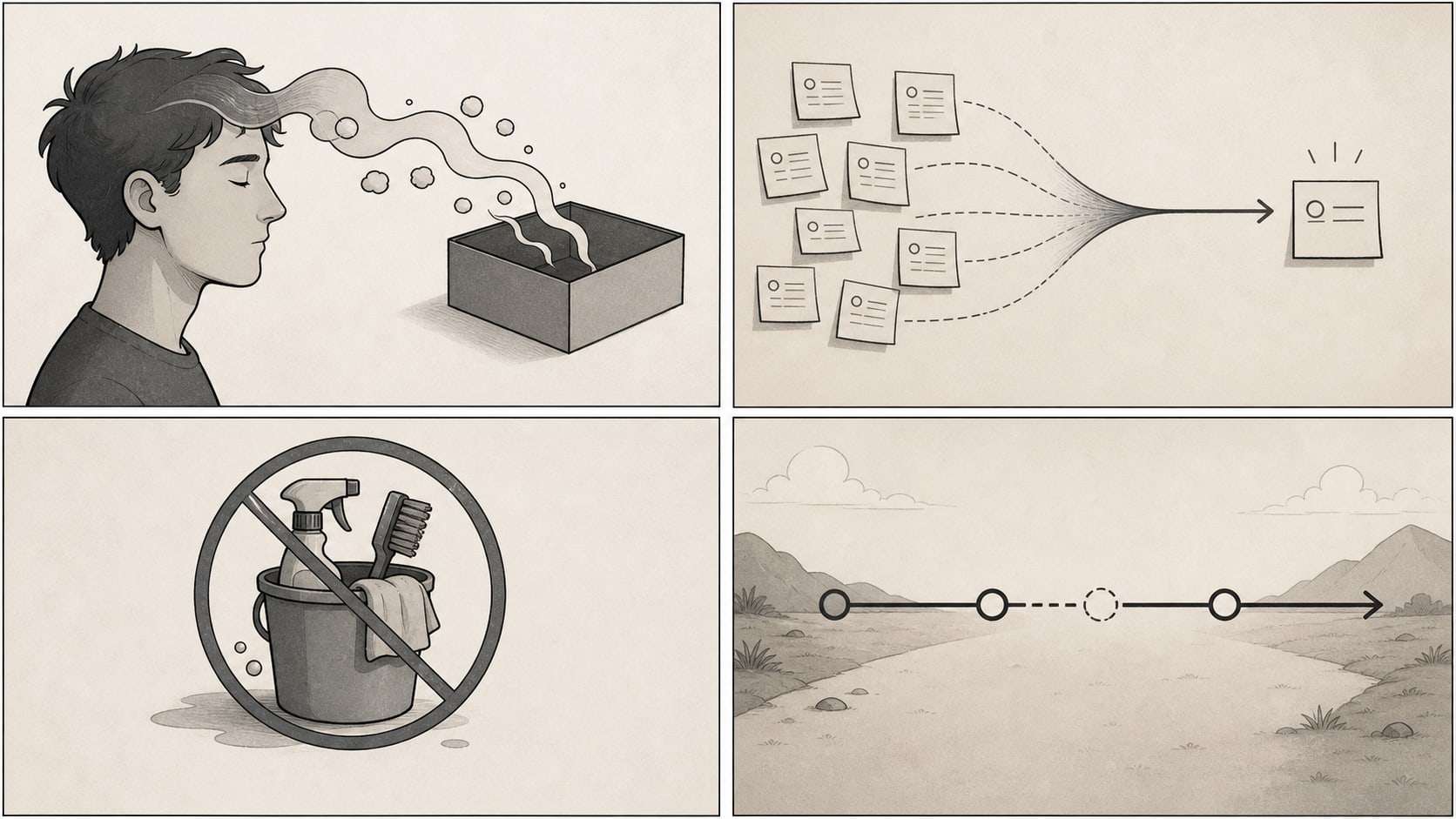
Notion is the clearest example. It's a beautiful, infinitely flexible workspace. You can build anything in it, which is exactly the problem. A blank canvas asks you to design your own system, maintain it, and supply the discipline to follow it. Most "productivity system notion" setups are gorgeous for two weeks and abandoned by week three, because the tool gave you flexibility when what you needed was constraint.
A tool stores your tasks. A system decides them. Notion, a notes app, a spreadsheet, even a plain text file, all store. None of them tell you what to do next or stop you from adding a tenth project. They wait for you to bring the structure. And structure-when-tired is the one thing you can't reliably bring.
This is why "just use Notion" never fixes the underlying problem. The flexibility you love when you're setting it up is the same flexibility that lets you quietly stop using it. An opinionated workflow beats a blank canvas for anyone who keeps not finishing things, because it makes the decisions the canvas leaves to you.
The system has to survive your worst day
The real measure of a system is how it performs when you're at your worst, not your best.
This matters double if your brain runs on ADHD wiring, where decision fatigue hits harder and a maintenance burden is a death sentence for any system. But honestly it applies to everyone. Everyone has the low day, the bored-of-this-project day, the slept-badly day. A system designed only for your sharp hours is designed for the minority of your hours.
The fix is the same in every case. Shrink the next action until starting it takes less energy than avoiding it. "Build authentication" is a wall you'll walk away from. "Add the email field to the signup form" is something you can do half-asleep. Make that small step the only thing the system shows you, and starting stops requiring a decision. You're not motivating yourself. You're removing every reason not to begin.
A productivity system for ADHD, or for any tired human, isn't about more structure layered on top. It's about less to decide, less to maintain, and one obvious next move that's always visible.

How to build a productivity system that runs without willpower
You can assemble this with any tools you already own. The five moves matter more than the app.
1. Pick one outcome, not a backlog. A system pointed at a single thing you're trying to finish can tell you what's next. A system holding forty open projects can only show you a list, and a list is just a decision you've deferred. Choose the one outcome that matters now and let the rest wait.
2. Externalize the next action. Write the literal next physical step out of your head and into the system. Not "work on the app." The actual move: "write the function that saves the form." Decide it once, while you're thinking clearly, so you never have to decide it again under load.
3. Shrink the next step until it's unavoidable. If a step feels heavy, it's too big. Cut it down until starting is easier than avoiding. Small steps beat motivation every time, because they don't ask for any.
4. Kill the setup ritual. Strip out every bit of upkeep the system needs to survive. No daily tidy, no elaborate tagging scheme, no weekly ceremony you'll skip the first busy week. If it needs maintenance to stay alive, it's already dying.
5. Remove the streak. Build it so a missed day costs nothing. Streaks and chains feel motivating until you break one, and then the broken streak becomes the reason you quit. A system that punishes you for being human will lose to being human every time.
Do those five and you've got something that runs on structure, not mood. That's the whole game. Not more productivity hacks, not a better app, just a system that decides for you and asks for nothing on the days you have nothing to give.
FoundStep: a productivity system built to ship
Everything above is the manual version. You can run it with sticky notes if you're disciplined about keeping them honest, which loops back to the original problem.
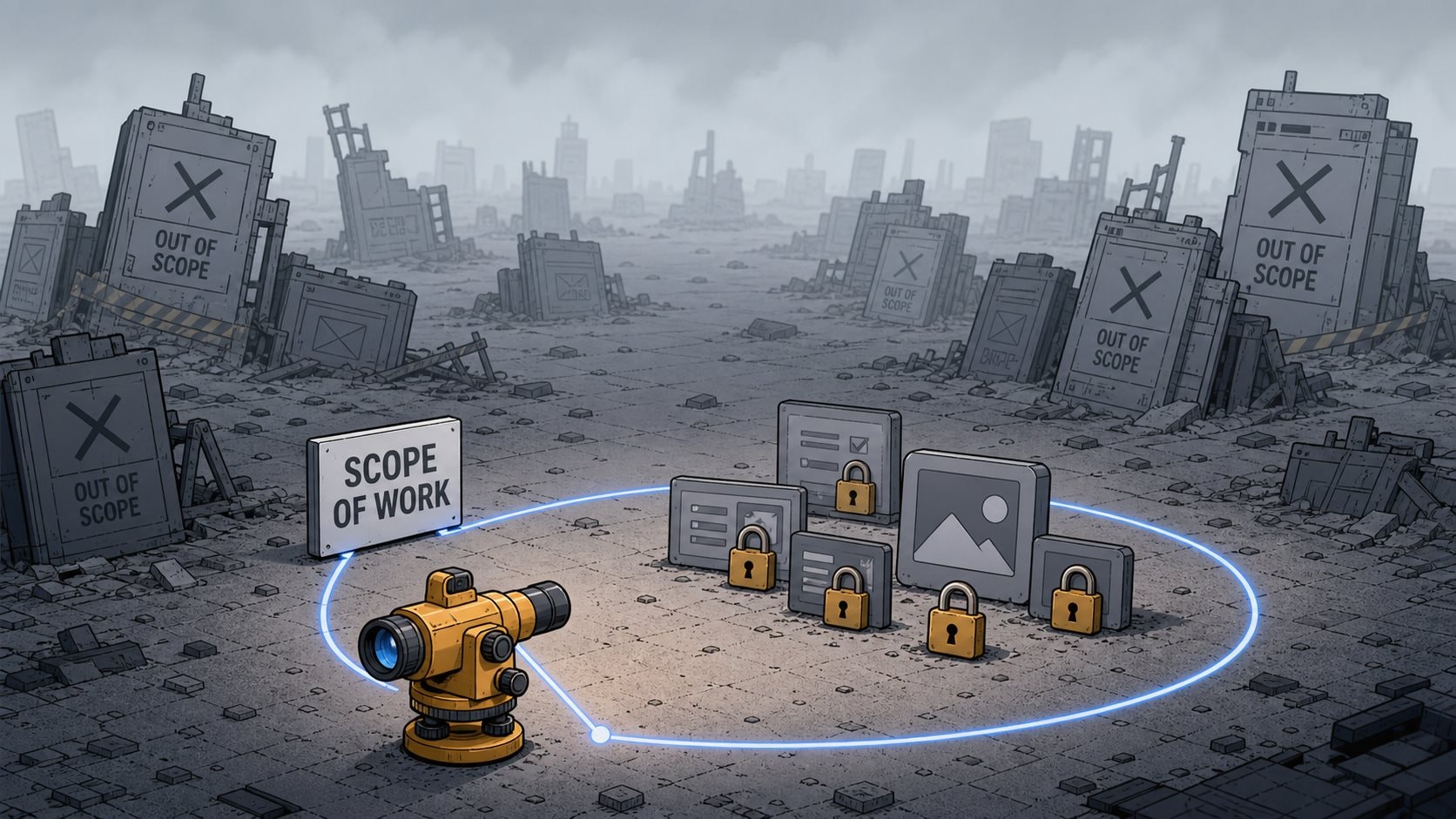
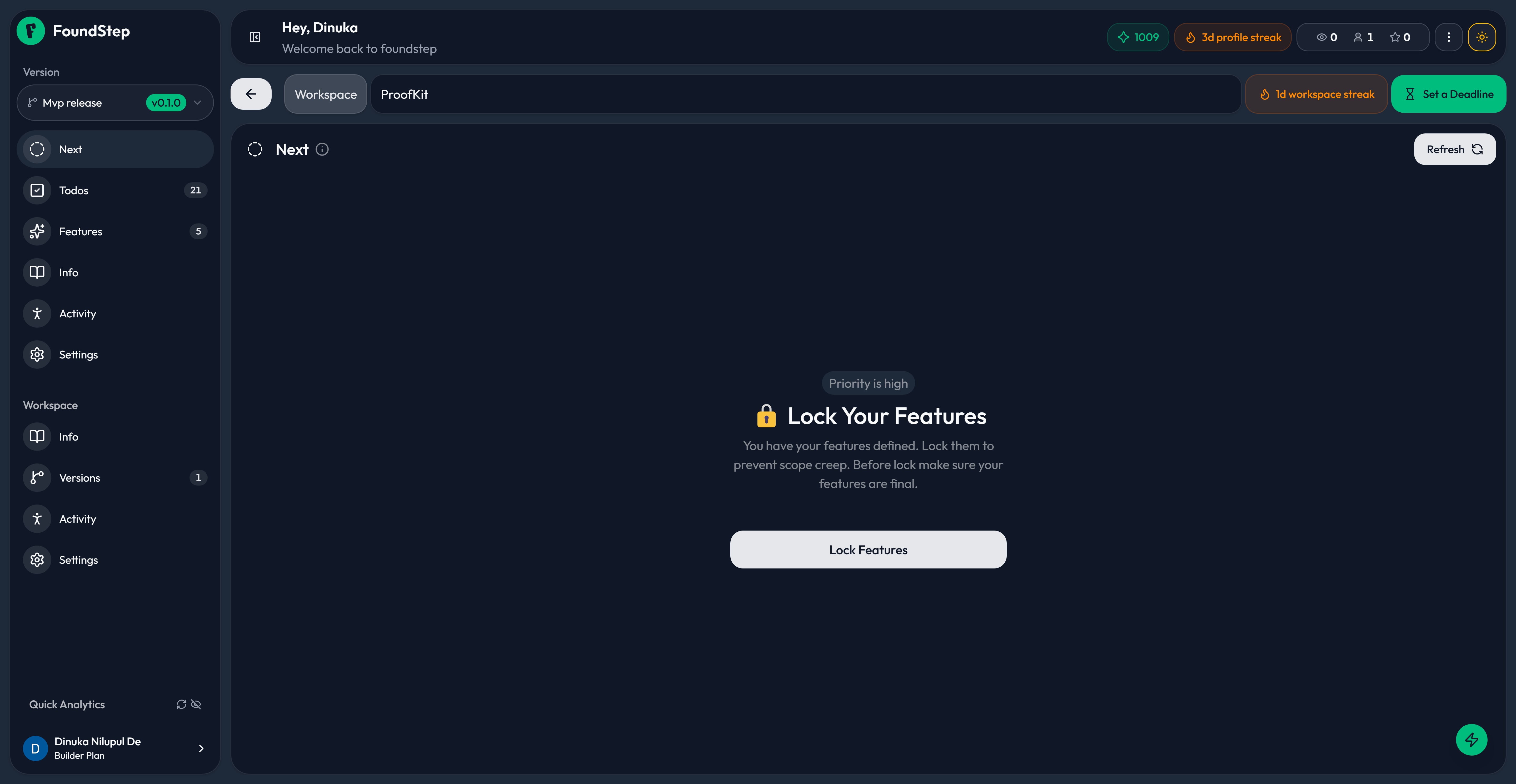
FoundStep is the version that runs itself, built for solo developers who keep abandoning projects. You lock your scope so the project can't quietly grow, then FoundStep surfaces a single next action from what's locked: the one small thing to do right now, decided for you, with no backlog to stare at and no board to tidy. There's no streak to break and no ritual to maintain. You open it, do the one thing, and close it.
It's the same five moves from this guide, except the discipline is built into the structure instead of borrowed from you. The system holds the line on the day you can't, which is the only day it ever mattered. If you've got a graveyard of half-built side projects and a folder of dead Notion setups, the fix was never more willpower. It was a system that doesn't ask for any.
Stop trying to become the kind of person who never has a bad day. Build the system that doesn't need you to be.
Start with FoundStep and let the structure carry the days your willpower won't.