You have 14 starred repos on GitHub. Twelve of them haven't been touched in months. The other two you opened last week, stared at for 20 minutes, then closed.
You're not lazy. You built real things at your day job. You shipped features under deadline pressure. But when it comes to your own projects, something breaks.
The standard advice doesn't help. "Just start." "Use the 2-minute rule." "Be kind to yourself." You've tried all of it. Nothing sticks because none of it addresses why side projects specifically trigger procrastination in ways that work tasks don't.
This is the system I use to actually ship. It's not about discipline or willpower. It's about removing the thing that causes procrastination in the first place.

Why Do I Procrastinate on Side Projects But Not Work?
At work, someone else defines what "done" looks like. Your ticket has acceptance criteria. Your sprint has a deadline. Your manager will notice if you don't deliver.
On your side project, you have none of that. You're the product manager, the developer, and the user all at once. Nobody defines the scope. Nobody sets the deadline. Nobody notices if you don't ship.
This is the real reason you procrastinate: ambiguity.
When the next step is unclear, your brain treats it as a threat. The cognitive load of figuring out what to do next triggers avoidance. You don't open the repo because opening it means confronting a pile of undefined decisions.
The procrastination causes most articles talk about (fear of failure, perfectionism, emotional dysregulation) are real, but they're downstream. The upstream cause, especially for builders, is that the work itself isn't defined well enough to act on.
I spent three months "working on" a SaaS idea. In reality, I spent three months avoiding it. Every time I sat down to code, I'd think: "Should I build the dashboard first? Or the auth? Or should I validate whether anyone even wants this?" The ambiguity was endless. So I'd check Twitter instead.
The discipline wasn't the problem. The definition was.

The Procrastination Causes Unique to Side Projects
Side projects have specific triggers that work tasks don't. Understanding them helps you build the right system.
1. No External Deadline
At work, someone else's expectations create urgency. On side projects, the deadline is "whenever I feel like it," which functionally means never.
Fake deadlines don't work. Telling yourself "I'll ship by Friday" fails because you know it's fake. What does work: a system that creates genuine constraints, like locking scope so you can't keep adding features.
2. Infinite Scope
Work tasks are bounded. "Add pagination to the users table" is finite. "Build my startup idea" is not.
Infinite scope is paralyzing. When anything could be next, nothing feels urgent enough to start. You end up in analysis paralysis, researching frameworks instead of building.
3. No Accountability Partner
At work, you have standups, code reviews, and colleagues who notice if you're stuck. Solo, you're the only one who knows you've been "almost done" for two months.
This isn't about needing someone to nag you. It's about needing something external to reflect your progress (or lack of it) back to you.
4. The "One More Feature" Trap
Work has a definition of done enforced by someone else. On side projects, done is whatever you decide, and you keep deciding it needs one more thing.
This is scope creep as a procrastination mechanism. Adding features feels productive. Shipping feels risky. So you add another feature instead of shipping.
How to Stop Procrastinating: The System
The standard tips (2-minute rule, pomodoro, self-compassion) treat symptoms. They help you start, briefly. Then the ambiguity returns and you're back to avoiding.
The system that actually works addresses the root cause: undefined work.
Step 1: Shrink the Scope Until It's Embarrassingly Small
You're not building "my startup idea." You're building v0.1: the smallest version that proves the core concept works.
Write down the features that v0.1 absolutely needs. Not the features that would be nice. Not the features you'll "definitely add later." Just the ones without which the product makes no sense.
Everything else goes on a "v0.2" list that you close and don't look at.
I learned this the hard way. My first side project had 47 items in the backlog before I wrote a line of code. I shipped none of it. My most recent project shipped with four features and no backlog. It took six weeks and I actually finished.
Step 2: Define the Next Step in Concrete Terms
"Work on the dashboard" is not a next step. It's a category. Your brain treats it like a box that could contain anything, so it avoids opening the box.
A concrete next step looks like:
- "Create the DashboardPage component with a heading that says 'Dashboard'"
- "Write the SQL query that fetches all links for a user"
- "Add a form field for the link slug with client-side validation"
The step should be small enough that you can picture exactly what you'll type. If you can't picture it, you haven't defined it well enough.
Before you close your laptop each session, write down the next concrete step. When you reopen, you skip the "what should I do?" paralysis entirely.
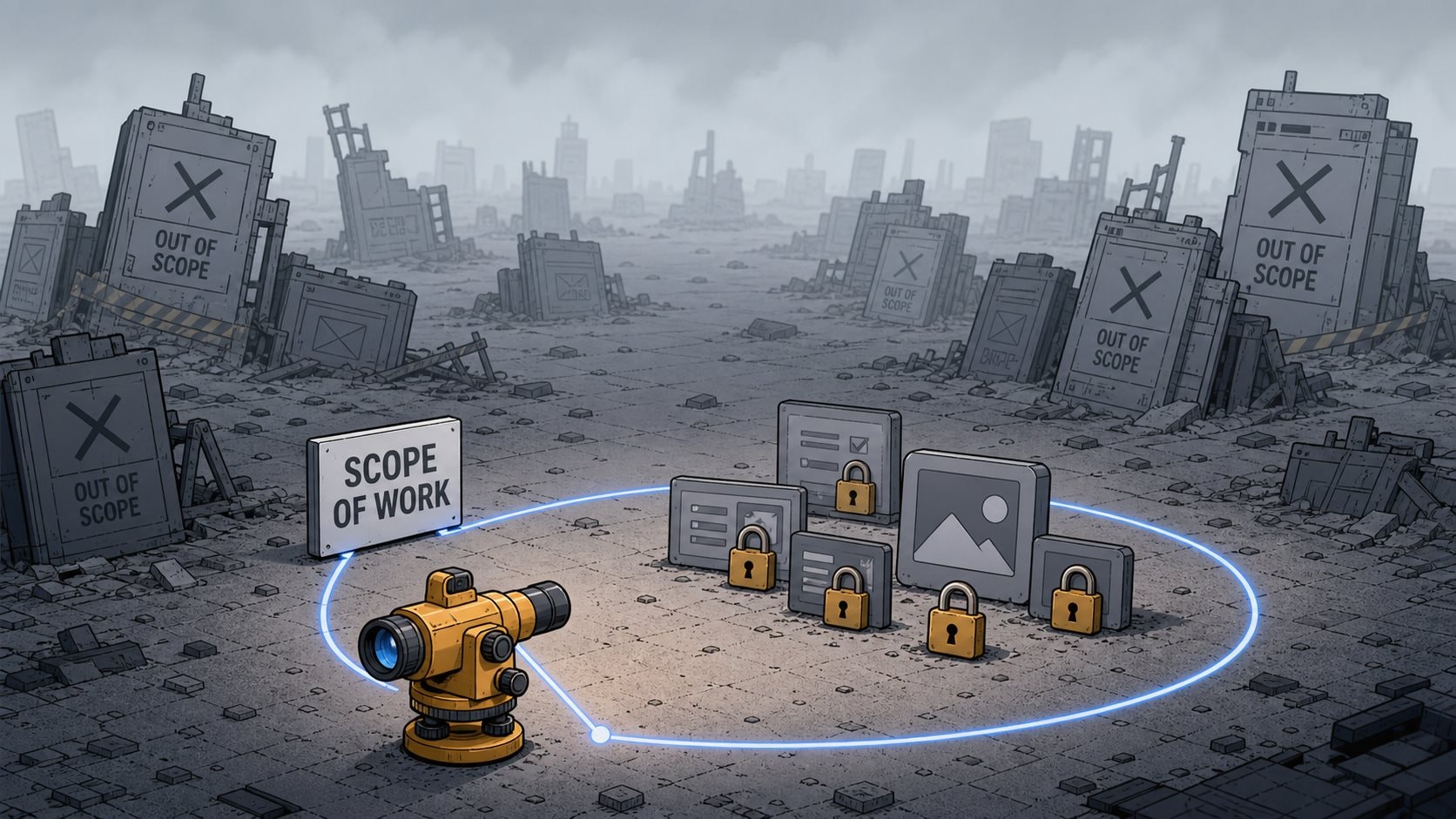
Step 3: Lock the Scope and Stop Looking at the Backlog
Here's what I didn't understand for years: the backlog is the enemy.
Every item on the backlog is a decision you haven't made. Every unmade decision is cognitive load. Every bit of cognitive load makes the next session feel heavier.
Once you've defined v0.1, lock it. Put the scope somewhere you can reference it, then close the backlog and don't reopen it until you ship.
This feels wrong. What if you forget a good idea? What if something important comes up?
You won't forget. And if something genuinely important comes up, it'll be important enough to remember without a backlog. Everything else is distraction disguised as planning.
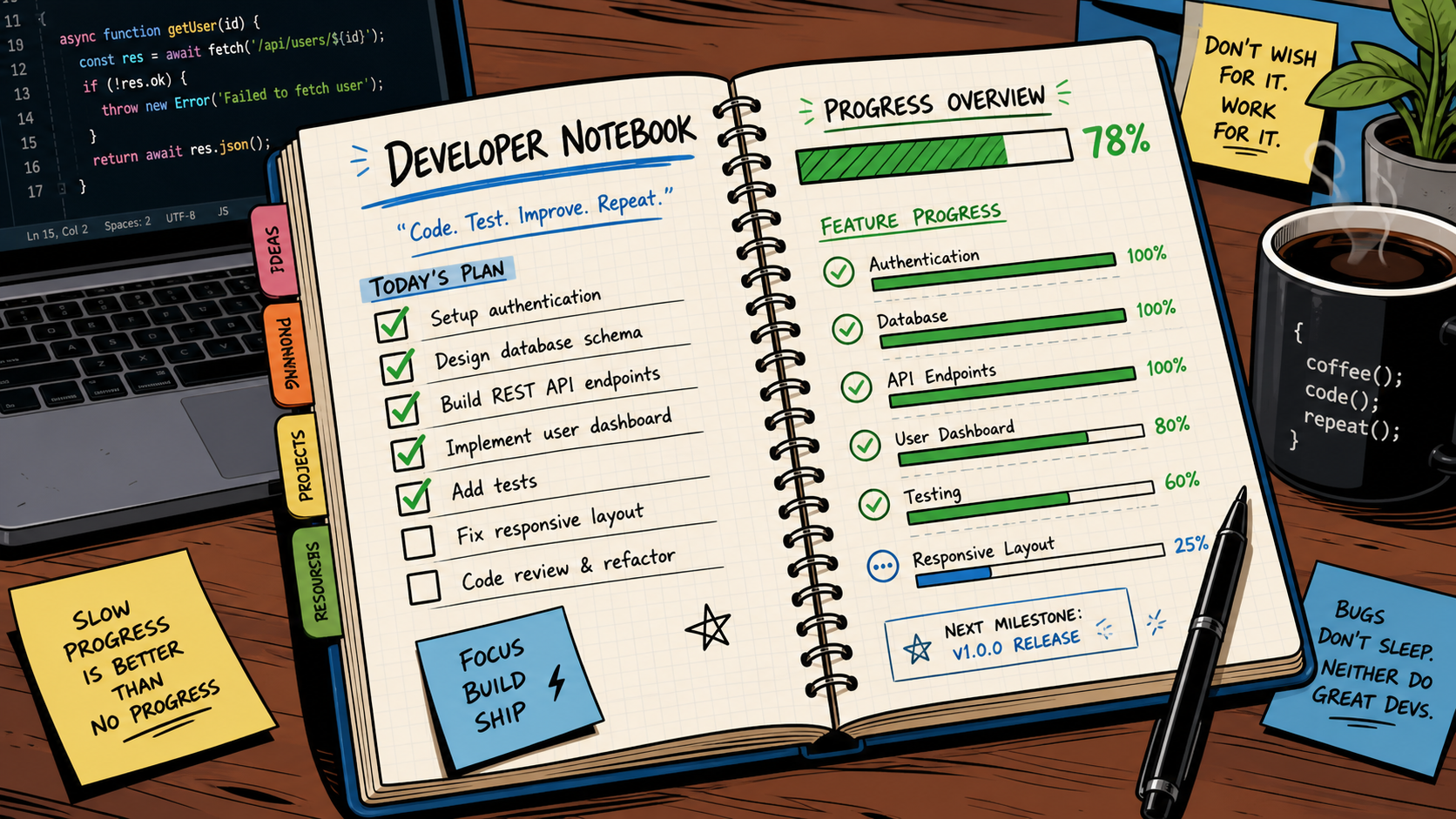
Step 4: Make Your Progress Visible to Yourself
When nobody else sees your progress, it's easy to convince yourself you're making none. Days blur together. "I worked on it" becomes indistinguishable from "I thought about working on it."
Track something visible:
- A done list that grows (not a todo list that shrinks)
- Git commits with meaningful messages you can scan
- A simple log: "June 7: shipped auth flow, next is dashboard"
The point isn't accountability theater. It's giving yourself evidence that you're moving forward. Progress is the best antidote to procrastination.
Step 5: Ship Before You Polish
The procrastination trigger for most builders isn't starting. It's finishing.
Finishing means exposing your work. It means finding out if anyone cares. It means transitioning from "building something cool" to "shipped something that might be mediocre."
So you keep polishing. You refactor the code. You add one more feature. You delay the moment of truth indefinitely.
Define "done" before you start, and stop when you hit it. Not when it feels ready. Not when you've added the features you thought of mid-build. When you've completed the scope you locked in Step 3.
Ship the ugly version. The polished version that never ships is worth less than the ugly version that does.
Why Willpower-Based Advice Fails
Most procrastination advice assumes you have a motivation problem. "Just start!" But you don't lack motivation. You lack clarity.
Willpower-based advice fails because it treats procrastination as a character flaw instead of an information problem. You're not avoiding work because you're lazy. You're avoiding work because the work isn't defined well enough to act on.
This is why the 2-minute rule works temporarily and then stops. Starting a task takes two minutes, but figuring out what the task actually is takes longer. The rule doesn't help with that.
The system above works because it front-loads the definition work. You do the hard thinking once (when you define v0.1 and lock the scope), then execution becomes straightforward.

The System I Actually Use
I've tried dozens of productivity tools. Notion boards with swim lanes. Linear with sprints. Plain text files. None of them fixed the underlying problem.
What works for me now:
One active project. Not two. Not "this one and that small thing." One. Everything else goes on a "someday" list I don't look at.
A one-page spec before I code. Problem, target user, features for v0.1, explicit out-of-scope list. Fifteen minutes to write. Saves weeks of wandering.
The next concrete step, always visible. I end every session by writing one sentence: "Next: [specific action]." When I start the next session, I do that thing first. No decisions required.
A done list, not a todo list. Each day I write what I shipped, not what I might do. The list only grows. Watching it grow is motivating in a way that watching a todo list shrink never was.
A locked scope I actually respect. When I think of a feature mid-build, I write it down in a "v0.2" doc and close the doc. I don't add it to the current build. I don't "just quickly" implement it. The scope is locked.
This isn't complicated. It's not even original. But it works because it addresses the actual cause of procrastination: undefined work.
Build the System Into Your Workflow
You can do all of this manually. Text files, notebooks, git commits with good messages. But friction adds up, and friction is procrastination fuel.
I built FoundStep specifically to make this system low-friction. It forces the one-page spec before you code. It locks the scope so you can't keep adding features. It shows your progress so you can see yourself moving forward.
But the tool matters less than the system. Define the scope. Lock it. Write down the next concrete step. Ship before you polish.
Stop waiting for motivation. Motivation follows action, and action follows clarity.
Start with the next step you can picture. That's it. That's the whole system.
Try FoundStep free: the productivity tool built for solo developers who actually want to ship.