I Have Nine Unfinished Side Projects. The Tool Is The Reason, Not Me.

I Have Nine Unfinished Side Projects. The Tool Is The Reason, Not Me.
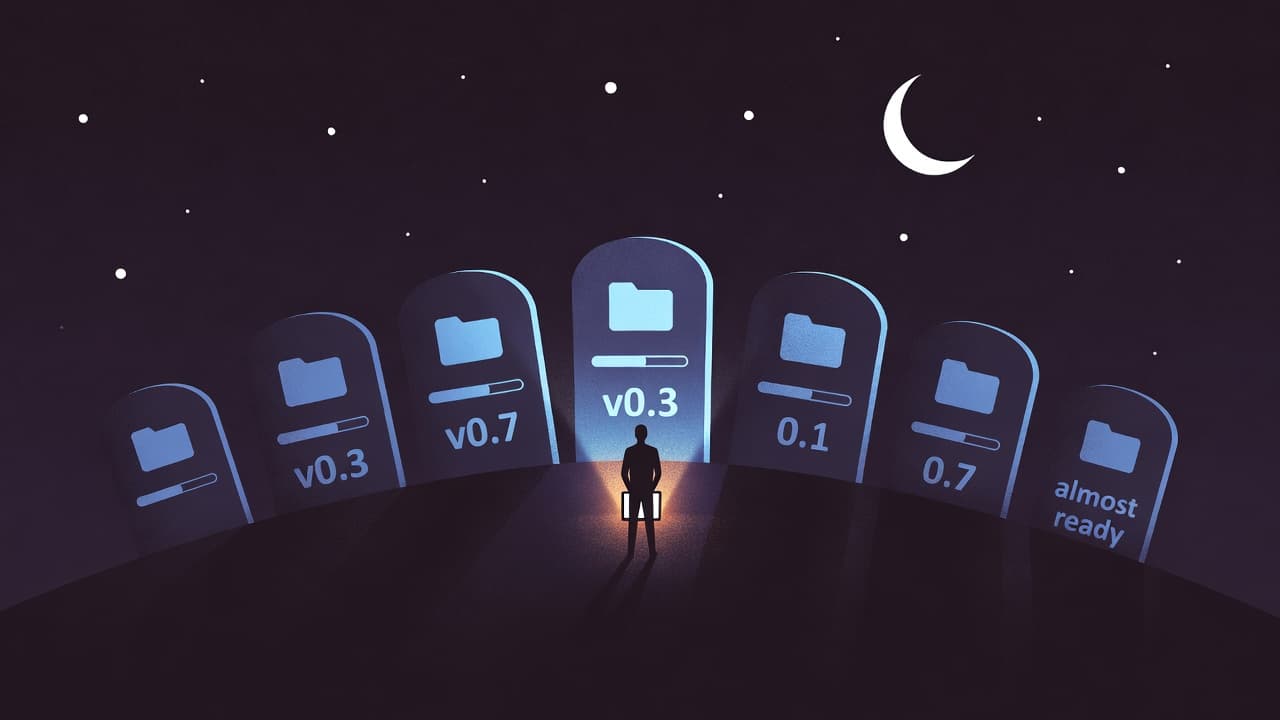
Nine projects sitting on my laptop. Zero shipped in the last 18 months. I have written code for 2+ years, hold a senior title at my day job, and my personal GitHub looks like a cemetery.
For a long time I assumed I was the problem. Lazy. Scattered. Bad at follow-through. I was wrong about the cause, and that mistake cost me roughly six years of side-project output. The tools I used did not cause my failure, but they made it possible at every step, and no amount of willpower was going to fix what the software was built to permit.
If you ship consistently on the side, none of this applies. Close the tab. This is for the developer with a graveyard of abandoned repos who still thinks the graveyard is a character flaw.
The audit I finally did
Last month I opened each dead repo and wrote down where it died. The pattern was embarrassing in how consistent it was. I had cycled through every tool a search for the best project management app turns up, and the same thing happened in each.
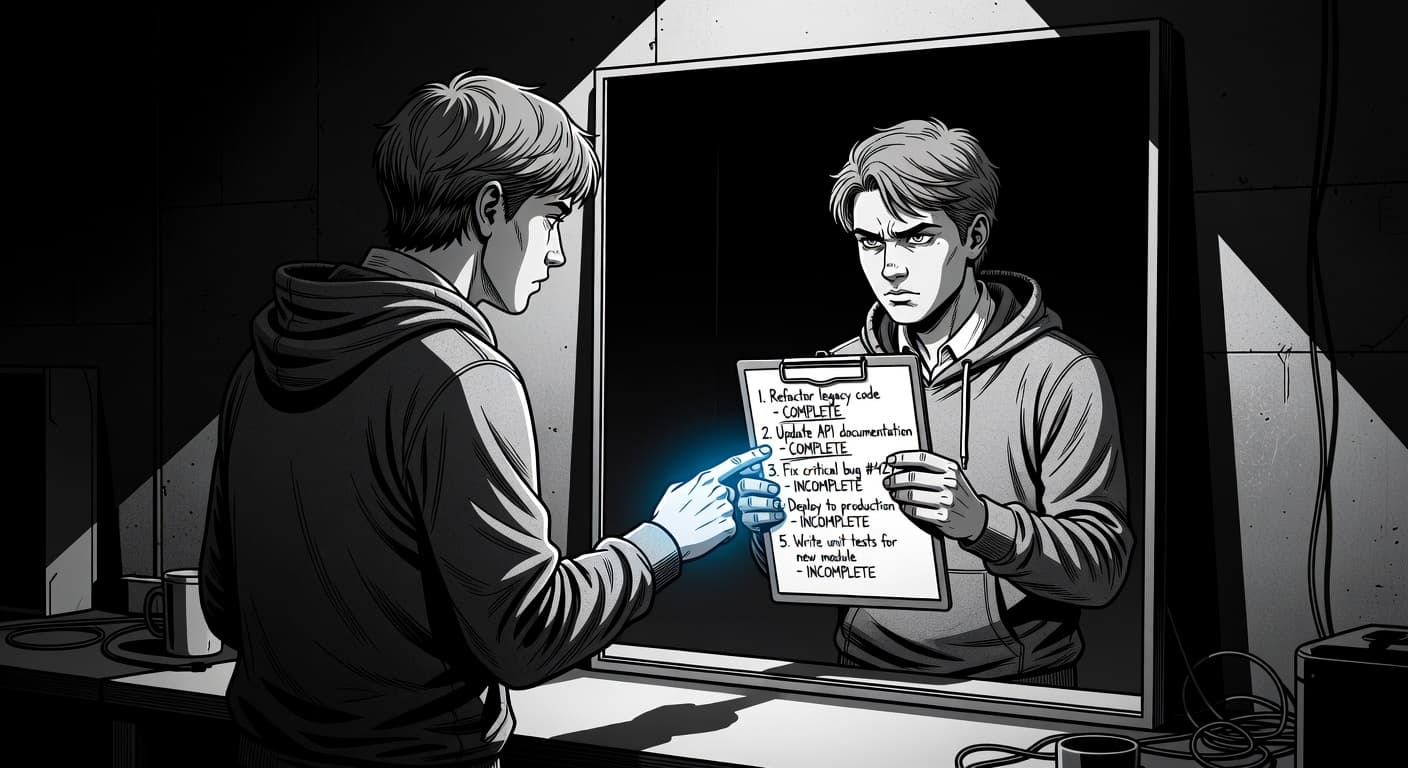
Project one died at feature 14 in Linear. Project two died in Notion after the idea doc hit 4,000 words and zero lines of code. Project three died in Trello with 37 cards, two of them green. Project four died at "one more refactor." Project five died at "it is almost ready," which I said for eleven weeks before archiving the repo. The other four followed the same script.
Every single one died for one of three reasons. Scope creep. Perfectionism. Zero external accountability. And every tool I used was completely fine with that.
The software did exactly what it was built to do
Every list of the best project management app picks one of these names. Notion is built for documentation. Linear is built for engineering teams running two-week sprints with a product manager. Trello is built for lightweight team collaboration. Things and Todoist are built for personal chores.
None of them were built for one tired human trying to turn a vague idea into a shipped product over four weeks, at 10pm, after a full day of other code.
When I added a 15th feature in Linear, Linear added the card. That is its job. When I rewrote a Notion doc for the sixth time instead of writing code, Notion saved the changes. That is its job. When I left a Trello card marked "in progress" for 94 days, Trello did not ask.
The software was neutral. I needed software that was not.
The three traps no tool was catching
Scope creep first. Week one I had four features. Week three I had eleven. None of my tools warned me. Why would they. Adding tasks is what they do.
Then perfectionism. I never hit a real "done" moment. The tool treated complete as a temporary checkbox I could uncheck whenever I noticed a rough edge. Nothing in the workflow said stop.
Then the accountability vacuum. I unlocked, unchecked, rewrote, and silently abandoned features with no record of any of it. The tool remembered the current state. It did not remember the story. When I quit a project, there was no artifact of the quitting. Just a repo that went stale, and a brain that quietly filed the failure as "I got busy."
What would have actually stopped me
I did not need more canvas. I needed less. I needed the software to push back at the exact moments my brain was lying to me.
A warning at the seventh feature, loud and persistent. A lock on work I said was done, so reopening it cost me something. A mandatory written reason every time I unlocked what I had closed. A ship confirmation that made the project read only. A public record of what I actually finished, not what I said I would.
None of that is complicated. It is simply absent from every tool built for teams, because teams do not need it. The best project management app for a solo developer is not the one with the longest feature list — it is the one that pushes back. I was not a team. I was one person at midnight with no one watching.
Try the audit on yourself
Open the project tool you used for your last abandoned side project. Answer three questions honestly.
One. At what point did the tool warn you that scope was slipping. If the answer is never, the tool was not built for your situation.
Two. When you abandoned the project, did the tool record why. If no, you have no memory of your own pattern, and you will repeat it on the next project.
Three. Does your tool have a shipped state that is actually final. If no, nothing in the workflow makes shipping feel real, and almost-shipped is where your projects go to die.
If you answered no to all three, the tool is not the one with the shipping problem. You are. But not the way you think you are. You are using software that was never going to help you finish.
The honest version
A tool does not ship your product for you. You still have to type the code. You still have to close the laptop when the feature is done and not rewrite it on Sunday.
Here is what I am saying. I spent six years trying harder with the wrong tools. I added daily review rituals, Notion templates, habit trackers, and three months of a paid accountability coach. None of it stuck, because the software I was working inside did not care whether I shipped.
The tool I use now is Foundstep. It is narrow and opinionated on purpose. It warns me at the seventh feature. It makes me write a reason every time I unlock work I said was done. It goes read only after I ship, so the project cannot quietly decay into another half-finished repo. I have shipped two v1s this quarter. Small ones. Real ones. Permanent, on my public wall.
Nine unfinished projects taught me one thing.
Willpower is not a plan. Structure is a plan. And if the structure is not in the tool, it is not anywhere.
TL;DR
The graveyard is not a character flaw. It is what happens when a team tool meets a solo brain. The best project management app for one person is the one that says no. Use software built to refuse.
If you want to try it, Foundstep is at foundstep.com. Start by running one of your graveyard ideas through the 11-question validation. You will know within ten minutes whether it was worth the months you spent on it.

Ready to ship your side project?
FoundStep helps indie developers validate ideas, lock scope, and actually finish what they start. Stop starting. Start finishing.
Get Started Free