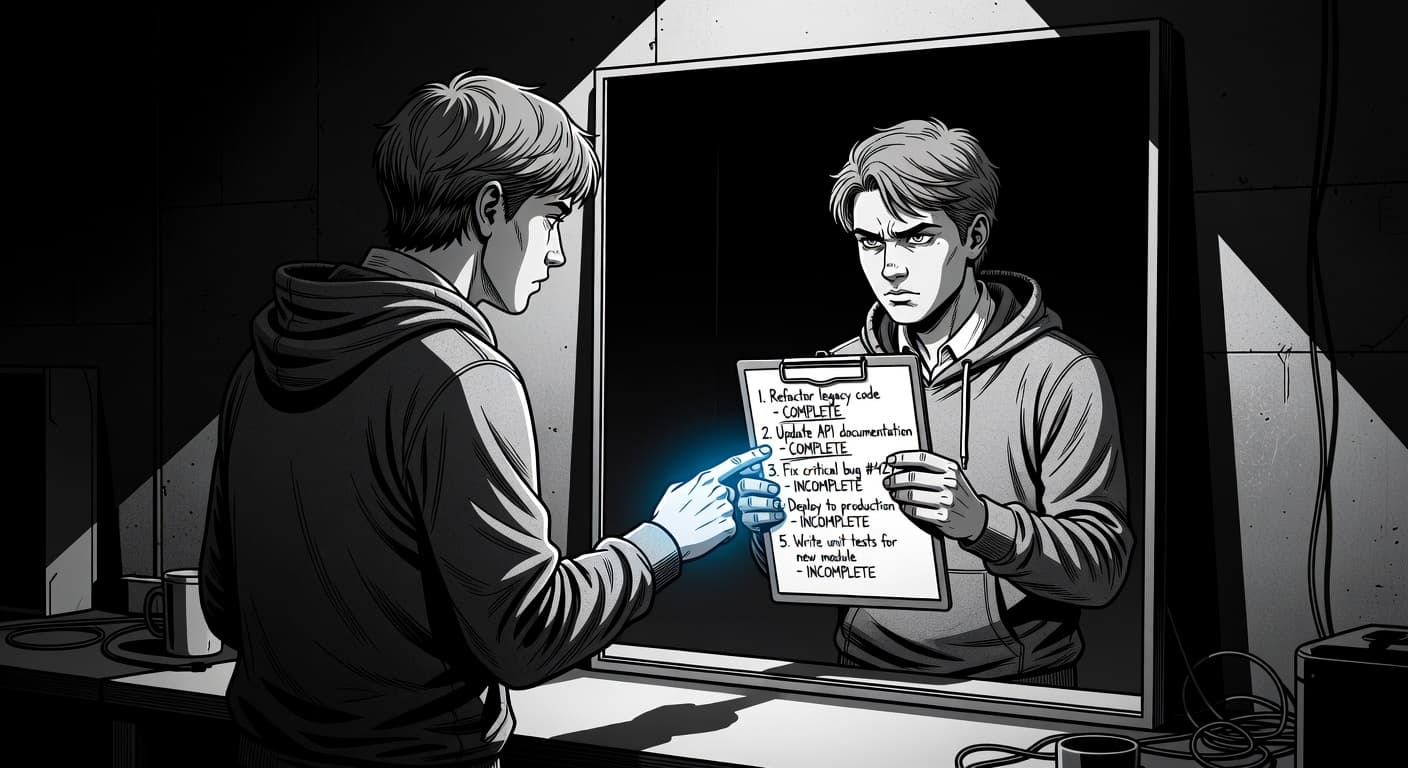
Side Project Burnout Is Real: How to Recognize It and Recover

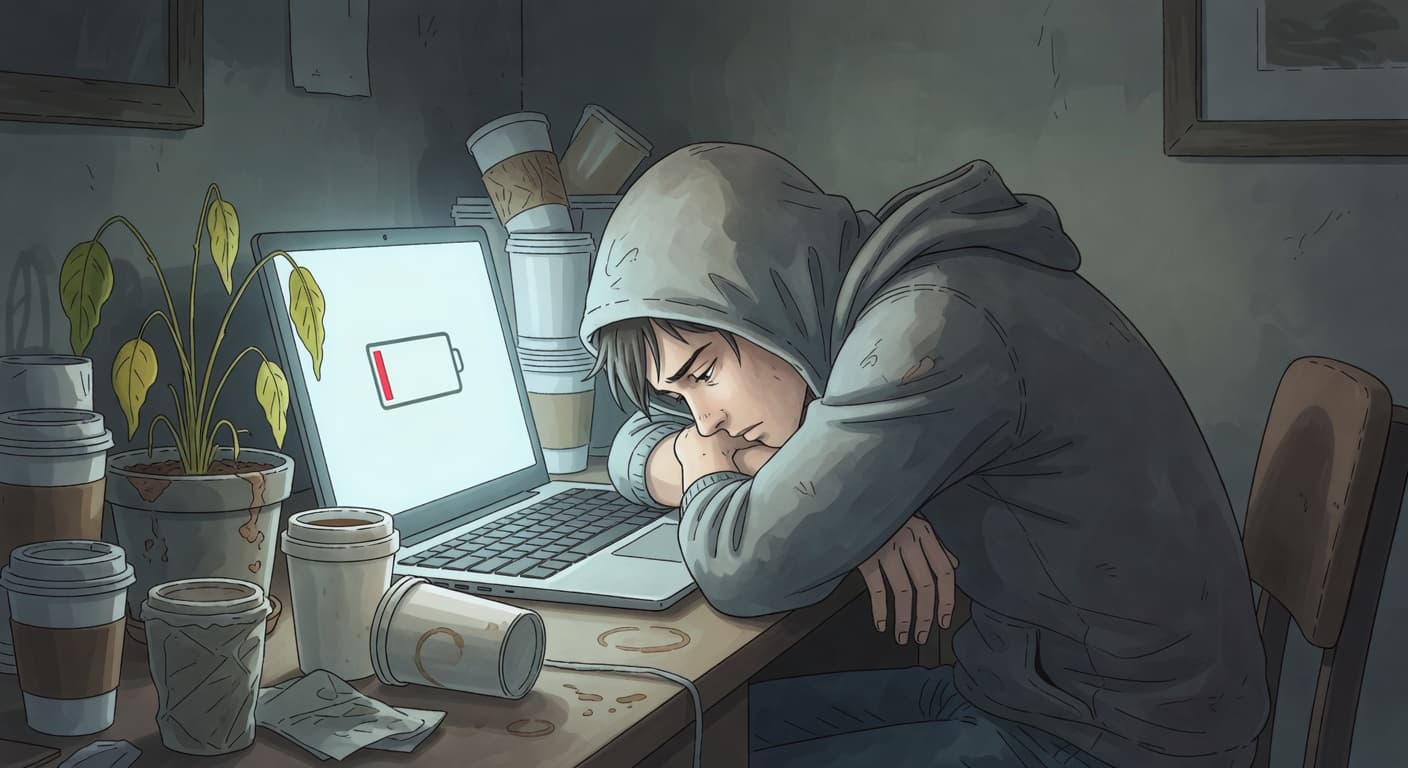
The burnout nobody warns you about
Developer burnout gets a lot of attention, and it should. Working 60-hour weeks at a startup, dealing with on-call rotations, or maintaining legacy systems for years can grind anyone down. But there's another kind of burnout that almost nobody talks about: the kind that comes from your side project.
This feels wrong to even say. Your side project is supposed to be fun. It's the thing you chose to build, using the technology you wanted, solving a problem you care about. Nobody is making you do it. There's no boss, no deadline, no performance review. So how can it possibly burn you out?
And yet. You haven't opened the codebase in three weeks. The thought of working on it makes you tired. You used to spend entire Saturdays coding happily, and now you can barely manage 30 minutes before you want to do literally anything else. The project isn't hard. It isn't boring. You just can't.
If this sounds familiar, you're not lazy. You're burned out. And side project burnout requires different treatment than the work variety because the causes are different.
Burnout vs. boredom: they feel the same, they aren't
Before we go further, let's separate two things that feel almost identical from the inside.
Boredom is when you don't want to work on this specific project. The payment integration is tedious. The CSS is fiddly. The bug you're chasing is annoying. But if someone offered you a new project with a fun new problem, you'd jump at it. Boredom is project-specific and usually phase-specific. It passes when the boring part is done.
Burnout is when you don't want to work on anything. Not this project, not a new project, not even a quick script to automate something at work. The idea of sitting down and writing code in your free time, any code, feels like a chore. Burnout is general and pervasive. It doesn't pass when you switch projects. It follows you.
The distinction matters because the solutions are opposite.
For boredom, the fix is usually to push through the tedious part, reduce your scope, or restructure the work to make it more interesting. Starting a new project is the wrong move because the new project will also have boring phases, and if you abandon every project at the boring part, you'll never finish anything.
For burnout, pushing through makes things worse. The fix is rest. Genuine rest. Not "I'll work on a lighter project." Not "I'll just read about tech instead of coding." Actual, screen-optional, non-productive rest. Take a week off from all coding outside work. Maybe two weeks. Maybe a month. However long it takes until the idea of coding on a Saturday sounds fun again instead of draining.
Why side project burnout hits different
Work burnout and side project burnout have different root causes, and understanding the difference helps you address it.
Research from developer analytics platforms suggests that 83% of developers report experiencing burnout — but this rarely distinguishes between work burnout and the unique exhaustion that comes from a personal project graveyard. The Stack Overflow Developer Survey found that burnout correlates strongly with lack of visible achievement, which is the signature of side project burnout, not just professional overwork.
Work burnout comes from external factors. Your boss is unreasonable. The deadlines are impossible. The codebase is a mess and nobody will let you fix it. You lack control over your situation, and that lack of control wears you down.
Side project burnout comes from internal factors. You have total control, and that control is exhausting.
Think about what "total control" actually means. It means you make every decision. What to build, how to build it, which features to include, which technology to use, when to work, when to ship. Every single decision is yours. And decisions cost energy.
Decision fatigue is well-documented in psychology. Making decisions depletes a finite mental resource. When you're making decisions all day at your job and then coming home to make another hundred decisions about your side project, you're drawing from an account that's already low.
But there's something else that makes side project burnout uniquely difficult. With work burnout, you can quit. It's a hard decision, but it's a clean one. You hand in your notice, you leave, you find another job. With side project burnout, quitting feels like failure. You chose this. Nobody forced you. If you can't even finish something you chose to do, for fun, with no pressure, what does that say about you?
This guilt cycle is the signature of side project burnout. You're too tired to work. You feel guilty about not working. The guilt makes you more tired. The tiredness makes you feel more guilty. The project sits untouched for weeks, and each week the guilt compounds.
I want to name this clearly: the guilt is the problem, not the rest. Taking a break from a side project is healthy. Feeling terrible about taking a break is what turns a natural pause into a burnout spiral.
Three Types of Side Project Burnout
Not all side project burnout is the same. Identifying your type matters because each has a different root cause and a different solution.
Scope exhaustion. Your project started as a clean MVP. Five features, ship in two weeks. Then you added OAuth, a dashboard, an admin panel. Each addition felt small. Together, they turned a two-week project into a three-month marathon with no finish line. Every feature you added moved the finish line further away. The fix: lock your scope. Define "done" before you start.
Project pile-up. You have six side projects. None are finished. Each weighs on you. Every time you sit down to code, you face an impossible choice: which abandoned project do you resume? The answer is usually none of them. The cognitive load of carrying all those open loops compounds until opening your laptop feels like a chore. The fix: kill or ship every stalled project. Go through each one and make a decision. No "I'll get back to it."
Invisible progress. You've been coding for weeks. You've made real progress. But you have nothing to show for it. No shipped product. No portfolio entry. No proof that you spent 80 hours building something. When your work is invisible, it starts to feel pointless. The fix: make progress visible. Ship small. Turn shipped projects into tangible proof. See also: what to do when you feel overwhelmed as a solo developer.
Warning Signs
Side project burnout doesn't arrive suddenly. It builds gradually, and it's easier to address early than late. Here's what to watch for.
You dread opening the project. Not in a "this bug is annoying" way. In a "I'd rather clean the bathroom" way. When your side project feels like an obligation rather than a choice, something has shifted.
You're constantly starting new projects. Each new project brings a burst of excitement and productivity, then fades after a few days. You tell yourself you're exploring. What you're actually doing is chasing the dopamine of novelty because the sustained effort of building feels impossible. This is one of the key patterns behind stopping the cycle of abandoning projects.
You feel guilty on rest days. If you spend a Saturday not coding and feel guilty about it, you've internalized the idea that your side project deserves your evenings and weekends. It doesn't. You chose to work on it. You can also choose not to. If that choice produces guilt, your relationship with the project has become unhealthy.
Your day job is suffering. When side project burnout is advanced, it bleeds into your professional work. You're tired at your actual job because you spent the weekend forcing yourself to code. Or you're distracted at work, thinking about your side project with a mix of anxiety and avoidance.
You're irritable about the project. If someone asks "how's your app going?" and your internal reaction is irritation, that's a sign. People who are engaged with their projects talk about them with energy, even when the work is hard. People who are burned out react to questions about the project with frustration or deflection.
Recovery: rest vs. quit vs. pivot
When you recognize burnout, you have three options. All three are valid. None of them is "push through."
Rest
Take a break. A real one. Not "I'll code less this week." Zero non-work coding for a defined period. Start with one week. If at the end of the week you still feel drained at the thought of coding, extend to two weeks. Keep extending until the feeling passes.
During your break, do things that aren't productive. Watch TV. Go for walks. Cook food. Read fiction. The point is to refill the tank that burnout drained, and you can't refill it by doing a different kind of productive work.
When you come back, start small. Don't try to jump back into a four-hour Saturday session. Do 30 minutes. See how it feels. Build back up gradually.
Quit
Sometimes the right answer is to kill the project. This is hard to accept, but some projects aren't worth finishing. Maybe the idea wasn't as good as you thought. Maybe the market doesn't exist. Maybe you've lost interest in the problem.
Quitting is not failure. Starting something and discovering it's not worth finishing is information. The failure mode is continuing to work on a dead project out of guilt, which burns you out further and prevents you from starting something you'd actually care about.
If you decide to quit, quit deliberately. Write down why. "I'm stopping Project X because the scope grew beyond what I can sustain alongside my job" is a legitimate, healthy decision. It's very different from just... not opening the project for six months and pretending it doesn't exist.
Pivot
Sometimes the project is worth building but the current approach is wrong. Maybe the scope is too large. Maybe the technology choice is creating unnecessary friction. Maybe you're building features nobody needs.
Pivoting means keeping the core idea and dramatically changing the execution. Cut the feature list in half. Switch to a simpler tech stack. Redefine the MVP to something you could ship in two weeks instead of two months.
This is where Scope Locking is especially useful. It forces you to explicitly define what you're keeping and what you're cutting, rather than vaguely "simplifying" without committing to specific changes.
Structuring side project work to prevent burnout
Prevention is better than recovery. Here's how to structure your side project work so burnout is less likely to occur.
Set a sustainable pace
"I'll work on my project every evening after work" is not sustainable. It's a recipe for burnout within six weeks. You need rest days. Real ones. Days where you don't code, don't think about your project, and don't feel guilty about it.
A sustainable pace for most developers with day jobs is 3 to 4 sessions per week, each 60 to 90 minutes. Some weeks you'll do more because you're excited. Some weeks you'll do less because life happens. Both are fine. What's not fine is scheduling yourself for seven sessions a week and then feeling like a failure when you only do four.
Keep scope small
Large scope is the leading cause of side project burnout. When your project has 20 features and you've been working for three months and you're only 30% done, the remaining 70% feels overwhelming. You can't see the finish line, so every session feels like shouting into the void.
Small scope is the antidote. Five features. Three weeks to ship. When you can see the finish line from where you're standing, every session feels like progress. And when you ship, the dopamine hit of finishing something real is better than any New Project Energy.
If your current scope is too large, cut it. Ruthlessly. Ask yourself: "What's the smallest version of this project that solves the core problem?" Build that. Ship it. Then decide if you want to add more. Shipping faster is a skill, and it starts with smaller scope.
Separate identity from output
This one is psychological but it matters. If your self-worth is tied to your side project output, every unproductive week feels like a personal failure. You're not a better developer because you shipped something last weekend. You're not a worse one because you watched Netflix instead.
Your side project is something you do. It's not who you are. Maintaining this distinction is what prevents the guilt cycle that turns normal rest into burnout fuel.
Take breaks before you need them
Don't wait for burnout to arrive before taking a break. Schedule rest weeks proactively. Work for three weeks, take a week off. Or work for six weeks, take two off. The specific rhythm doesn't matter. What matters is that rest is planned, not reactive.
Planned rest doesn't carry guilt because it's part of the plan. You're not skipping work. You're executing the rest phase of your schedule. This reframing sounds trivial but it makes a genuine difference in how the break feels.
Set boundaries with your project
Treat your side project like a part-time job with firm hours. "I work on this Monday, Wednesday, and Saturday evenings from 7 to 8:30." Outside those hours, the project doesn't exist. No thinking about features in the shower. No sketching architecture on your lunch break. No "quick fix" at 11pm.
These boundaries protect your rest time from being colonized by project thoughts. Without them, the project is always running in the background, consuming mental energy even when you're not actively coding.
The cultural problem
Developer culture has a complicated relationship with side projects. On one hand, side projects are celebrated. Indie hackers, open source contributors, and weekend builders are admired. On the other hand, the celebration often comes with an implicit message: real developers are always building.
This message is harmful. Real developers have hobbies that aren't coding. Real developers have weekends where they don't open a terminal. Real developers sometimes go months without working on a side project, and that doesn't make them less real.
The pressure to always be building creates a backdrop of guilt that makes burnout more likely. If you believe you should be coding in every free moment, then every moment you're not coding feels wasted. And when your side project work feels like an obligation rather than a choice, burnout is inevitable.
Permission to stop is just as valuable as motivation to start. Maybe more so.
Coming back after burnout
If you've burned out and taken a break, here's how to come back without immediately burning out again.
Start with a new project or a drastically simplified version of the old one. Don't return to a project that burned you out. The association between that codebase and the feeling of burnout is real and it takes time to fade.
Set a tiny scope. Something you could ship in two weekends. The goal isn't to build something impressive. It's to rebuild the habit of shipping with positive associations.
Work only when you want to. For the first few weeks back, don't schedule sessions. Just code when you feel like it. This rebuilds the connection between coding and enjoyment that burnout severed.
Track what you ship, not how many hours you work. Hours worked is a burnout metric. Shipped features is a health metric. One ship per week means you're building sustainably. Zero ships despite many hours means you're heading back toward burnout.
Be honest with yourself about how it feels. If after a month of easy-paced work you still dread opening your editor, the burnout might be deeper than a few weeks can fix. Consider talking to someone about it, whether that's a friend, a partner, or a professional. Burnout from side projects can connect to broader patterns around productivity, self-worth, and identity that are worth examining.
If You Have Too Many Projects Right Now
If having too many side projects is driving your burnout, the structural fix is the same as above: pick one, kill or vault the rest. You cannot recover by maintaining six simultaneous commitments.
Vaulting is different from abandoning. A vaulted project is a conscious decision to pause without guilt. It exists in a list you'll return to after you ship your current project. An abandoned project is something you stopped looking at but didn't decide to stop.
The distinction matters psychologically. Decision reduces cognitive load. Avoidance increases it.
The Permission You Might Need
If you've read this far, there's a decent chance you're currently burned out on a side project. So here's what I want to say directly.
It's okay to stop. It's okay to rest. It's okay to never finish that project. It's okay to have a weekend where you don't code. It's okay to have a month where you don't code. Coding is something you do, and choosing not to do it for a while is not a moral failure.
The project will be there when you come back. Or you'll start a different project. Or you won't, and you'll spend your free time on something else entirely. All of these are fine outcomes for a human being who happens to know how to code.
Take care of yourself. The code can wait.

Ready to ship your side project?
FoundStep helps indie developers validate ideas, lock scope, and actually finish what they start. Stop starting. Start finishing.
Get Started Free