Building a Productivity System That Actually Works for Indie Developers

The productivity advice you're ignoring is probably right (for someone else)
I've read the productivity books. Cal Newport's Deep Work, Getting Things Done, Atomic Habits, The One Thing. They're good books. They're also written for people who have one job with clear boundaries, a manager who defines priorities, and colleagues who share the load.
If you're an indie developer, you have none of that. You're the developer, the designer, the product manager, the marketer, the customer support rep, and the CEO. You decide what to build, when to build it, how to build it, and whether to ship it. Nobody is setting your priorities. Nobody is reviewing your work. Nobody is holding you to deadlines.
Generic productivity advice fails indie developers because it assumes the hard part is execution. For most people, it is. Their boss tells them what to do, and the challenge is doing it efficiently. For you, the hard part is deciding what to execute. The decision of what to work on next is the single largest drain on indie developer productivity, and most productivity systems ignore it entirely.
This is a guide to building a productivity system that works for the way indie developers actually work. Not adapted from team processes. Built from scratch for people who ship alone.
Busy vs. productive: the distinction that changes everything
Here's a question that might sting a little. In the last month, how many hours did you spend coding? Now, how many features did you actually ship to users?
If the ratio feels off, you're not alone. Most indie developers confuse being busy with being productive. They spend entire weekends refactoring code nobody has seen, optimizing databases with three users, or researching the perfect tech stack for a project that doesn't exist yet.
Being busy feels like progress. Your editor is open, your terminal is running, you're solving problems. But if none of that work reaches a user, it didn't happen. Not in any way that matters.
Productive indie development is shipping work that solves a problem for someone. Everything else is either preparation for shipping (acceptable in small doses) or procrastination disguised as work (the silent killer).
The distinction isn't about working harder. It's about changing what counts as work. If I spend four hours building a feature that ships tomorrow, that's productive. If I spend four hours researching which state management library to use for a hypothetical feature, that's not. Both feel the same while you're doing them. Only the outcome is different.
Why generic systems fail indie developers specifically
Most productivity systems were designed for one type of worker: employees with a defined job, a manager who sets priorities, and a team to share the load. Pomodoro tracks your time — but time isn't the problem. Pomodoro won't help you ship because it doesn't care whether your 25-minute sessions moved you toward launch. GTD captures every task, but it has no opinion on which tasks actually matter for shipping. Time blocking assumes you have a clear schedule to protect — but indie developers build in stolen hours with no predictable rhythm.
The reason these systems fail isn't that they're bad. It's that they're solving the wrong problem. For indie developers, the challenge is not executing faster. It's deciding what to execute, keeping scope under control, and maintaining consistency across the fragmented schedule that comes with working alone on personal projects.
Why your current system probably isn't working
Most indie developers fall into one of three patterns, and all three kill productivity.
The first pattern is no system at all. You sit down, open your laptop, and work on whatever feels interesting or urgent. Some days that's a new feature. Other days it's a bug that's been nagging you. Some days you start a new project entirely because the current one feels stale. There's no plan, no priorities, no constraints. You're guided by mood, and mood is a terrible project manager.
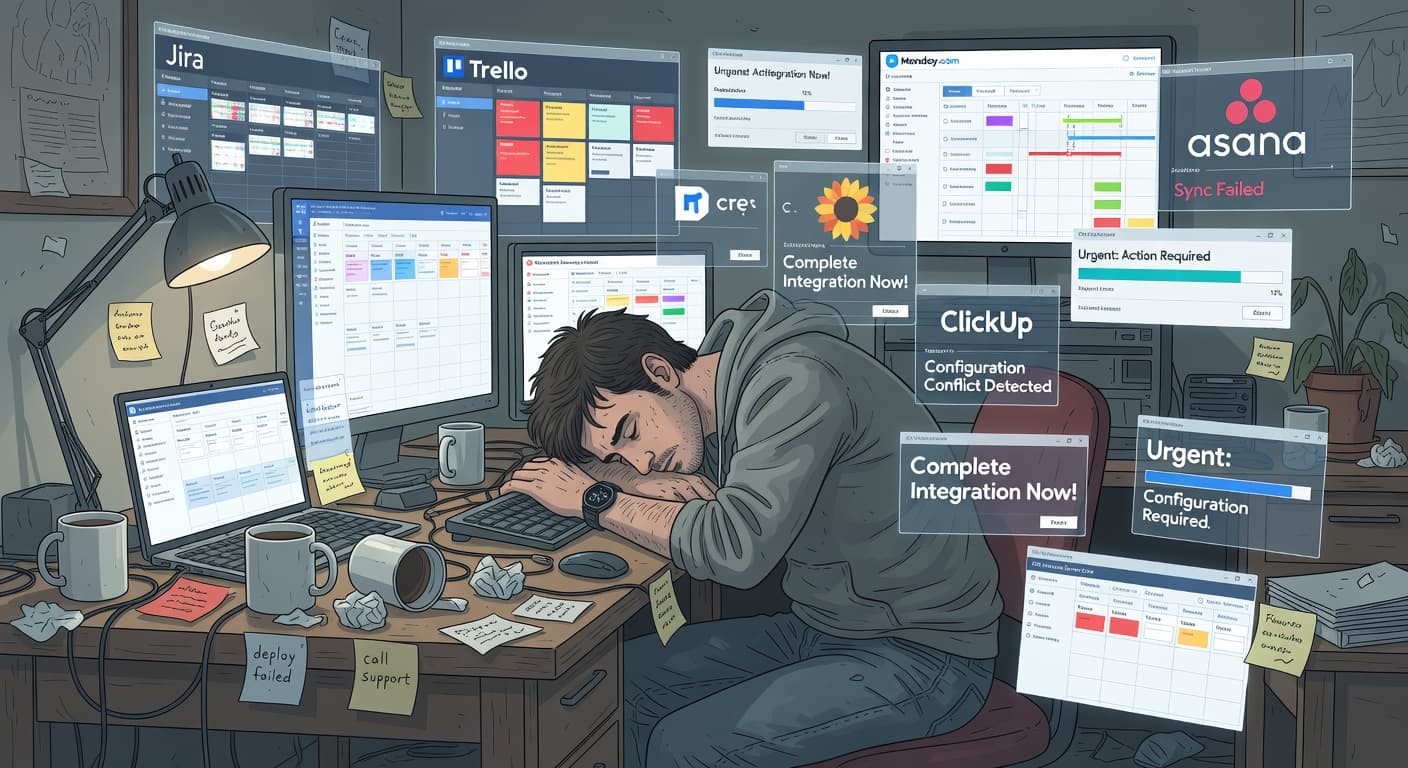
The second pattern is borrowed systems. You read about how Basecamp runs their Shape Up process, or how some startup does two-week sprints, and you try to adapt it for solo work. It feels productive for about a week. Then the overhead of maintaining a process designed for teams starts eating into your actual work time. You're spending 30 minutes every morning updating a Jira board that nobody else will ever see.
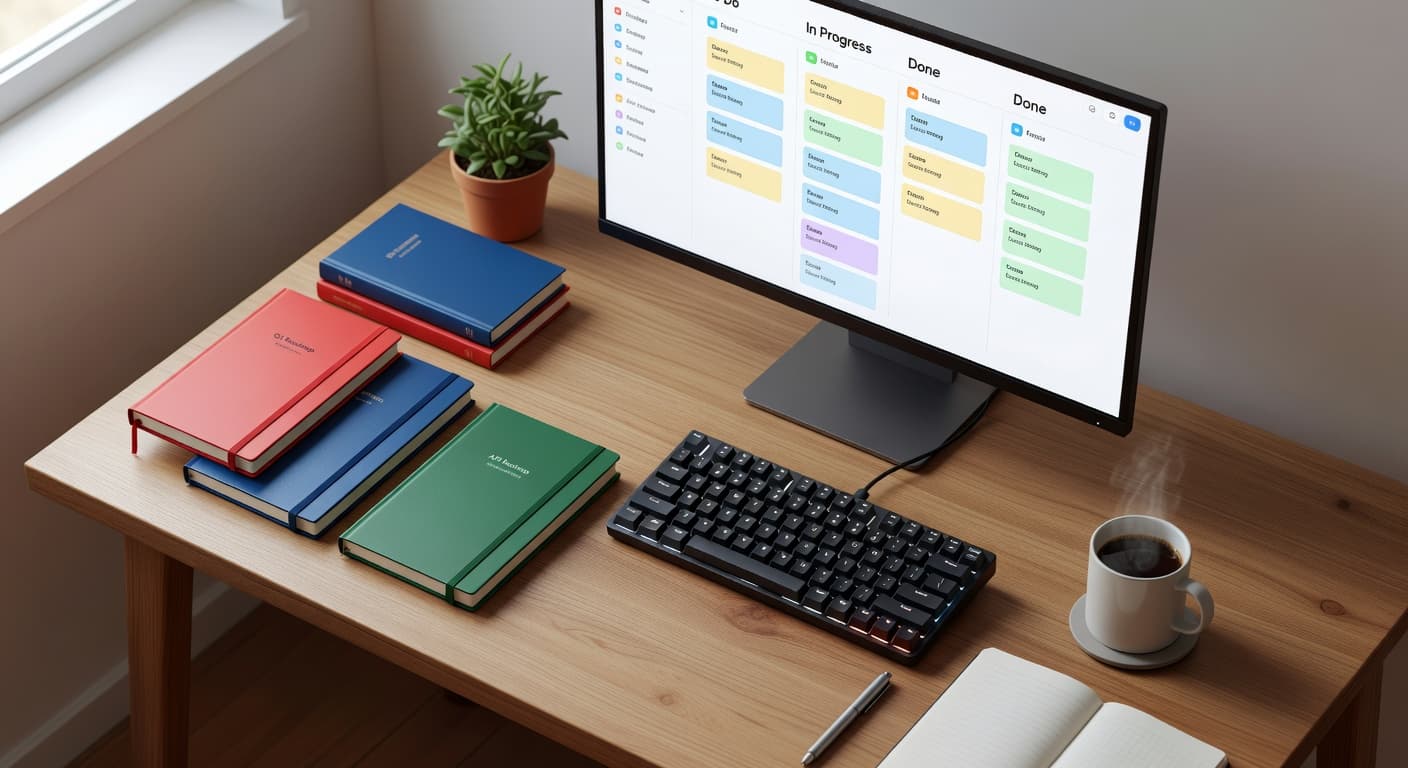
The third pattern is over-engineering your productivity system. You build an elaborate Notion setup with databases, automations, dashboards, and templates. You spend more time maintaining the system than doing the work the system is supposed to organize. The system becomes the project.
None of these work because none of them address the actual problem. Indie developer productivity isn't about managing tasks. It's about managing yourself.
The three pillars of indie developer productivity
After years of watching indie developers ship (and fail to ship), I've noticed that the ones who consistently deliver have three things in common. These aren't personality traits. They're practices anyone can adopt.
Pillar 1: Scope discipline
The number one productivity killer for indie developers is scope creep. Not the external kind, where a client keeps adding requirements. The internal kind, where you keep adding requirements to yourself.
You start building a todo app. Then you decide it needs tags. Then recurring tasks. Then collaboration features. Then an API. Then a mobile app. Each addition feels small and reasonable in isolation. Together, they transform a two-week project into a six-month project that never ships.
Scope discipline means deciding what you're building, writing it down, and then treating that list as frozen. Not flexible. Not "aspirational." Frozen. If you want to change it, you have to deliberately unfreeze it, write down why you're making the change, and accept that the change is recorded.
This is exactly what Scope Locking does. You define your features, lock the scope, and any modification requires an explicit unlock with a reason. It sounds restrictive. It is restrictive. That's the point. Restrictions are what separate projects that ship from projects that grow forever.
Pillar 2: Output measurement
You need a clear, honest answer to the question "am I making progress?" And that answer can't be based on feelings.
Hours coded is not a useful metric. Lines of code is actively misleading. Commits per day tells you nothing about value. According to Stack Overflow's developer satisfaction research, developers rank meaningful output — shipping work that matters — as a top contributor to job satisfaction. Yet most productivity systems measure inputs (time, tasks, habits) instead of outputs. The only metric that matters for an indie developer is: did something ship?
A shipped feature is progress. A shipped bug fix is progress. A shipped landing page is progress. An unshipped refactor, no matter how elegant, is not progress. It might become progress later if it enables shipping. But right now, it's unrealized potential.
Track what you ship. Weekly. A simple list: "This week I shipped X, Y, and Z." If the list is empty for two weeks in a row, something is wrong with your process, your scope, or your motivation. The list won't fix the problem, but it will make the problem impossible to ignore.
Harbor is built around this idea. It's a wall of everything you've shipped, with dates and details. It turns your shipping history from a vague feeling ("I've shipped some stuff") into concrete evidence ("I've shipped 12 projects in the last year, and here they are").
Pillar 3: Decision reduction
Every decision you make costs energy. What to work on, which bug to fix first, whether to use Postgres or MySQL, whether to add that one more feature. Each decision is small. Cumulatively, they drain your ability to do deep work.
The most productive indie developers I know have strong defaults. They use the same tech stack for every project. They follow the same weekly rhythm. They have a predetermined answer to "what should I work on next?" that doesn't require real-time deliberation.
This isn't laziness. It's engineering your environment so that the decisions that don't matter are already made, leaving your decision-making energy for the decisions that do.
A practical daily system
Here's a concrete system you can start using tomorrow. It's designed for indie developers who have day jobs and work on their projects in the margins.
Morning (5 minutes): Before you open your editor, open your project and look at what you committed to shipping this week. Pick the one task that moves you closest to shipping. That's your task for today. Write it down. Don't pick two tasks. Pick one.
Work session (60-120 minutes): Work on that one task. No Slack, no Twitter, no "quick research." If you hit a blocker, write it down and keep working on a different part of the same task. Don't switch to a different task because this one is hard.
End of session (5 minutes): Write one sentence about what you accomplished. Not what you worked on. What you accomplished. "Implemented the login flow and it works" is good. "Worked on auth stuff" is not. If you can't write a clear accomplishment sentence, tomorrow's task should be smaller.
That's it. No standup notes, no sprint boards, no burndown charts. One task, one work session, one sentence.
The system works because it eliminates decisions during your work session. You already know what to work on. You already know the rules (one task, no distractions). The only thing left is doing the work.
A practical weekly system
Weekly planning is where you set the direction. Do this on the same day every week, ideally Sunday evening or Monday morning.
Review (10 minutes): Look at your accomplishment sentences from last week. Count how many days you shipped something. Count how many days you worked but didn't ship. If the second number is bigger than the first, your tasks are too large or your scope is too broad.
Plan (15 minutes): Write down 3 to 5 things you want to ship this week. Not "work on." Ship. Each item should be completable in one or two sessions. If it's bigger than that, break it down until it is.
Lock (2 minutes): Commit to this list. If you're using FoundStep, lock your scope. If not, write the list somewhere you can't easily edit it. The point is that your weekly plan is a contract with yourself, not a suggestion.
Protect (ongoing): During the week, ideas will come to you. New features, new projects, new technologies to explore. Write them in a separate "someday" list. Do not add them to this week's plan. They'll be there next week when you plan again.
This weekly rhythm is the best workflow for solo developers because it balances structure with flexibility. You're not locked into a two-week sprint. You're not flying blind with no plan. You're making weekly commitments that are small enough to keep and large enough to matter.
Protecting deep work time
You've probably heard the term "deep work." The concept is real even if the phrase is overused. You do your best coding in uninterrupted blocks of focused time. Context switching is expensive. Every interruption costs you 15 to 25 minutes of re-engagement.
For indie developers with day jobs, deep work time is scarce. You might have two hours in the evening, or a few hours on weekends. Protecting those hours is not optional. It's the entire game.
Practical protection strategies:
Put your phone in another room during work sessions. Not on silent. In another room. If it's within reach, you'll check it.
Close every browser tab that isn't directly related to your current task. Every one. If you need to look something up later, write it down instead of opening a tab.
Tell the people you live with when you're in a work session and what "don't interrupt unless the house is on fire" means to you. Be specific. Be kind. Be firm.
Use the same physical location for your indie work every time. Your brain associates spaces with activities. If you code in the same chair at the same desk, your brain will start dropping into focus mode faster.
Don't start your session by checking email, social media, or Hacker News. Start by opening your editor to where you left off yesterday. Your first action should be typing code, not reading.
Measuring productivity by output, not input
I want to come back to this because it's the most counterintuitive part of the system.
Productive indie developers don't track hours. They track shipments. The reason is simple: hours are a measure of effort, and effort doesn't correlate with results. You can put in enormous effort on the wrong thing, or unfocused effort on the right thing, and both will show a full time log with nothing to show for it.
Here's what to track instead.
Weekly: What did I ship? A simple list. Features, bug fixes, landing pages, blog posts, whatever went from "in progress" to "done and live."
Monthly: What's my ship rate? How many of the things I planned to ship actually shipped? If you planned 20 things and shipped 5, your scope is too ambitious or your tasks are too big.
Per project: What's my scope change count? How many times did I add, remove, or modify features after committing to a plan? A high number means your planning needs work. A low number means your discipline is strong.
These metrics tell you something actionable. Hours logged does not. If you ship faster, these numbers will reflect it before you feel it.
The system in practice: a real week
Monday evening. I open FoundStep. I look at my project, a simple API monitoring tool I'm building. My locked scope has five features: health checks, email alerts, uptime dashboard, settings page, and a landing page. This week, I plan to ship email alerts and the uptime dashboard.
Tuesday, 7pm. I work on email alerts. One session, 90 minutes. By the end, the email sending works but the configuration UI doesn't. I write: "Email alerts send correctly. Need config UI tomorrow."
Wednesday, 7pm. I build the email alert configuration UI. 75 minutes. It's ugly but functional. I'm tempted to spend another session on the design. I resist. It works. It ships. I write: "Email alert config UI done. Alerts feature complete and deployed."
Thursday, skip. I'm tired from work. This is fine. The system doesn't require daily work. It requires consistent work.
Friday, 8pm. I start the uptime dashboard. I get the data fetching working and a basic chart rendering. I write: "Dashboard fetches and displays uptime data. Needs styling."
Saturday morning, 2 hours. I style the dashboard and deploy it. I write: "Uptime dashboard complete and deployed."
Sunday evening. I review: two features shipped this week. Scope change count: zero. Ship rate: 100% of what I planned. Good week.
That's the system working. Not heroic. Not glamorous. Just consistent progress toward shipping.
Common objections and honest answers
"This system is too simple." Yes. That's on purpose. Complex systems create overhead, and overhead is the enemy of indie developer productivity. If your system requires more than 20 minutes per week of maintenance, it's too complex.
"What about long-term planning?" Plan quarterly. Pick 1 to 2 projects you want to ship in the next three months. Break the first one into weekly milestones. Ignore the second one until the first ships. Long-term planning for indie developers is just "what am I shipping next?"
"What if I have multiple projects?" Pick one. Work on that one until it ships or until you deliberately decide to stop (with a written reason). Running multiple projects in parallel is how projects die. If you're struggling with this, too many side projects covers exactly how to choose and commit. The escape from the side project graveyard starts with focus.
"What about marketing and non-coding tasks?" They're work too. "Wrote landing page copy" and "set up analytics" are valid weekly items. The system isn't just for code. It's for shipping, and shipping requires more than code.
The mindset shift
The deepest change this system requires isn't behavioral. It's about what you consider "productive."
If you currently feel productive after a long coding session regardless of what you shipped, this will feel wrong at first. You'll have evenings where you ship a small feature in 45 minutes and feel like you didn't work enough. You'll have other evenings where you code for three hours, ship nothing, and feel the system marking that as unproductive.
Both reactions are the system working. It's recalibrating your internal sense of productivity away from effort and toward output. Over time, you'll start naturally gravitating toward tasks that ship, because those are the ones that count.
And that shift, from measuring input to measuring output, is the single biggest lever for indie developer productivity. Everything else is details.
Where to start
If this system resonates, don't try to implement all of it at once. Start with one change.
This week, write down 3 things you want to ship. At the end of the week, check how many you actually shipped. That's it. One week, one experiment, one data point.
If you shipped all three, great. Do it again next week with the scope locked tighter. If you shipped zero, ask why. Were the tasks too big? Did you get distracted by something else? Did you change your mind about what to build?
The answer to that question is the beginning of your productivity system. Not a framework borrowed from a book or a startup. A system built from your actual patterns, designed for the way you actually work.
And if you want a tool that builds scope discipline and output tracking into the workflow itself, FoundStep was designed for exactly this. But the system works with a notebook and a pen too. The tool matters less than the practice.

Ready to ship your side project?
FoundStep helps indie developers validate ideas, lock scope, and actually finish what they start. Stop starting. Start finishing.
Get Started Free