How to Stop Abandoning Side Projects


Stop abandoning side projects by locking your scope, validating before building, and creating unavoidable accountability.
That's the short answer. If you want to go implement that right now, go ahead. The rest of this article is for people who want to understand why each piece matters and how to set it up so it actually sticks.
Open your GitHub profile. Count the repos. Now count the ones that are actually finished and shipped to real people. If that ratio makes you wince, you're not alone. According to the JetBrains Developer Ecosystem Survey, most developers work on personal projects — and most of those projects never reach a single user.
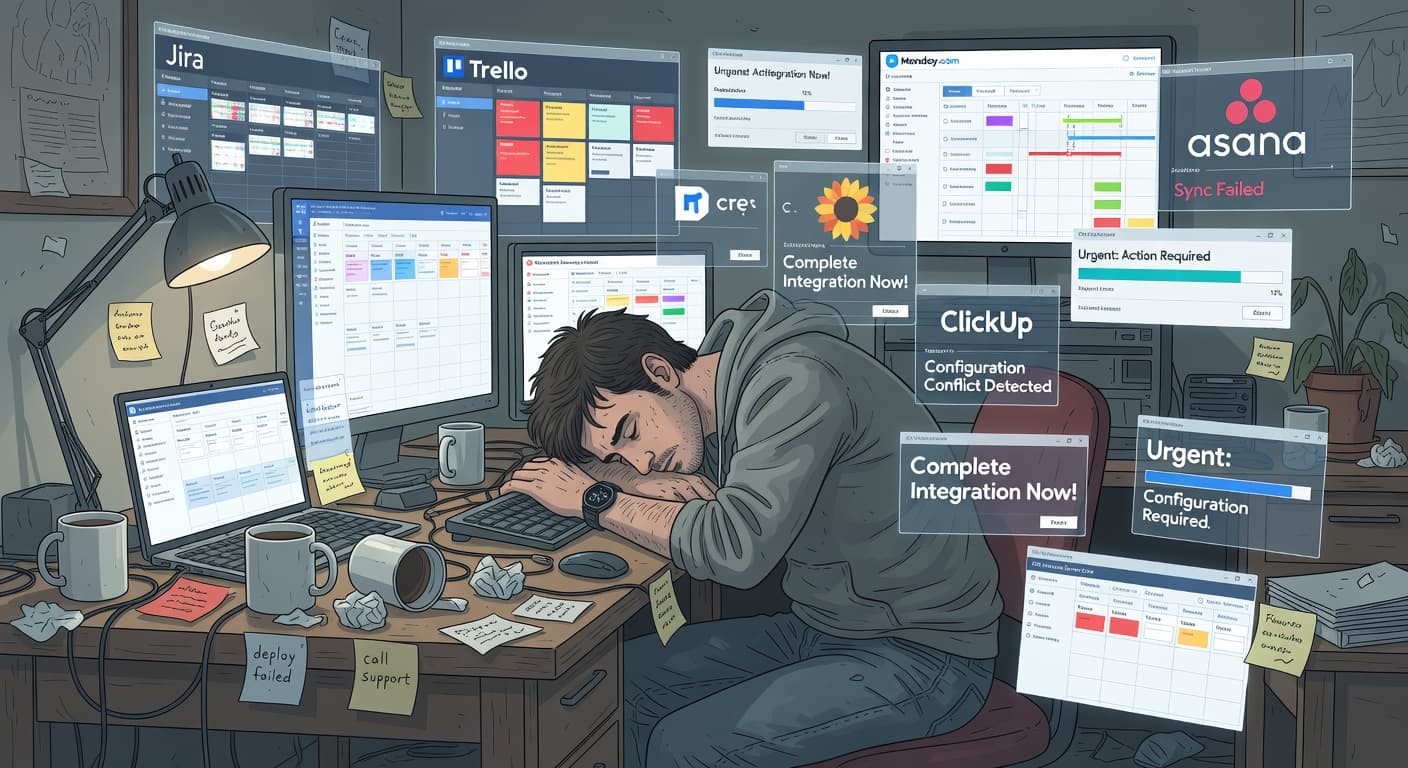
Because here's the thing about stopping yourself from abandoning projects: you've probably tried before. You've told yourself "this time I'll finish." You've maybe even written out a plan. And it worked for a few weeks, right up until the project hit that awkward middle phase where the exciting parts are done and everything left is boring wiring and edge cases. Then a new idea showed up. And the old project quietly moved to the back of your mind, then out of your weekly routine entirely.
If that cycle sounds familiar, you're not broken. You're just building without a system. Here's how to build one.
Why you keep abandoning projects
Before we fix anything, let's be honest about why this keeps happening. Most developers who struggle to finish side projects share the same three root causes:
You start building before you know if the idea is worth building. This is the big one. You get excited about a concept, spin up a repo, start coding, and three weeks in you realize you're solving a problem nobody actually has. Or that the solution already exists and is free. Or that the market is too small to care about. By then you've burned through your initial enthusiasm and there's no rational reason to keep going.
Your scope grows faster than your progress. You write down five features. By week two, it's twelve features, because each one spawned two more that felt necessary. This also feeds shiny object syndrome — when the current project feels too big to finish, a new idea looks even more appealing by comparison. By week four, the project feels enormous and you're maybe 30% done. The finish line moved while you were running toward it, and now you can't see it anymore.
There's no cost to quitting. Nobody knows you started. Nobody knows you stopped. There's no boss, no team, no user waiting for the next release. You can close the laptop and never open that repo again, and the world won't notice. That's freedom, sure. But it's also the reason why the project dies without resistance.
If you want to stop abandoning side projects, you have to address all three. Fixing one isn't enough. Validated ideas still die to scope creep. Locked scope still dies to lack of accountability. You need the full system.
Step 1: Validate before you build
I know. You want to code. Validation sounds like a corporate exercise that gets between you and the keyboard. Bear with me.
The reason validation matters is practical, not philosophical. If you spend two hours testing your idea against reality before building, you either confirm it's worth your next few weeks or you save yourself those weeks entirely. Either outcome is a win.
Here's a bare-minimum validation check. Answer these five questions honestly:
- Who has this problem? Can you name specific people, or are you imagining a vague "users would probably..."?
- How are they solving it now? If the answer is "they're not," ask yourself whether that's because they're suffering without a solution or because the problem isn't painful enough to solve.
- Would they pay for something better? If not, you're building a hobby project, which is fine, but be honest about it.
- Can you build a useful first version in under a month of part-time work? If not, your scope is already too big.
- Are you excited about this problem or this technology? Building something because you want to try a new framework is legitimate, but don't confuse it with building something people need.
If you can't answer at least three of these with specific, concrete answers, the idea needs more thought before it gets a repo.
FoundStep formalizes this as a 7-step validation framework that forces you through these questions before a project can move to the planning phase. It's annoying in the moment. It's valuable in retrospect.
Step 2: Lock your scope
You've validated the idea. You've written down the features for your v1. Now comes the part that actually prevents the slow death of scope expansion: you lock the scope and make it stay locked.
Locking scope means drawing a line around what you're building and committing to it. Everything inside the line gets built. Everything outside the line goes on a v1.1 list. The line doesn't move unless you go through a deliberate, documented process to move it.
Why does this matter? Because scope creep in side projects isn't caused by external pressure. It's caused by your own excitement. You're mid-build and you think of something cool. The gap between "what if..." and "git commit" is about thirty seconds. There's no sprint boundary, no ticket process, no PM to say "next release." So the feature gets added and the timeline extends and you barely notice until you're three months in and nowhere near done.
The scope locking approach works by making additions cost something. In FoundStep, unlocking your scope requires writing a reason that gets permanently recorded. It's a small friction, maybe thirty seconds of typing, but it's enough to break the automatic cycle of idea-to-implementation.
You can do this without tooling. A simple rule: every new feature requires a written entry in a scope change log, including the date, what you're adding, why, and what you're willing to cut or delay. If you're not willing to cut anything, you don't get to add anything.
Step 3: Create accountability you can't delete
This is the step most people skip, and it's the one that makes everything else work.
Accountability means your progress, your scope changes, and your failures are visible to someone or something outside your own head. Because inside your own head, you can rationalize anything. "I'm not abandoning it, I'm just taking a break." "I'll come back to it when I have more time." "The idea wasn't that good anyway." These stories are comfortable and they let you off the hook.
External accountability doesn't let you off the hook.
Some options, from lowest to highest friction:
Track it yourself, but permanently. Keep a log of every project you start and its status. Updated, active, shipped, abandoned. When you can see that you've abandoned your last four projects, the pattern becomes hard to deny.
Build in public. Post weekly updates somewhere. Twitter, a blog, a Discord. This works because the social pressure of publicly not following through is uncomfortable. But it's also fragile. You can stop posting and nobody will chase you down about it.
Use a system with built-in history. This is what FoundStep's Shame History does. Every scope unlock, every abandoned feature, every broken commitment is recorded permanently and attached to your project. You can't edit it. You can't delete it. When you ship, your Ship Card shows your unlock count. When you don't ship, your project history shows the trail.
The point isn't to shame yourself into productivity. It's to make the cost of quitting visible. When abandoning a project is free and invisible, you'll do it constantly. When it leaves a mark, you think harder about whether to start.
Step 4: Ship small, ship fast
How to finish what you start programming comes down to a simple principle: reduce the distance between starting and shipping.
If your first version takes six months, you will almost certainly abandon it. The boring middle is too long, life interrupts too many times, and newer ideas are too tempting. But if your first version takes three weeks, you can push through the boring parts because the finish line is always visible.
This means your v1 should be small. Uncomfortably small. Small enough that you feel slightly embarrassed shipping it. That's the right size.
Five to seven features. That's it. Not twelve. Not "well, it depends on the complexity." Five to seven. If you need more than seven features for a useful v1, either your idea is too big or you haven't found the actual core value yet.
Here's a test: for each feature on your list, ask "would someone refuse to pay for this product if this specific feature was missing?" If the answer is no, it's a v1.1 feature. Cut it. It can wait.
The developers who ship consistently are the ones who ship small things frequently, not the ones who spend eighteen months on a single perfect release. Your first version is a hypothesis, not a finished product. Get it out, learn from it, iterate.
The Difference Between Killing and Abandoning
This distinction matters more than most developers realize.
Killing a project is a conscious, deliberate decision. You've evaluated the project, decided it's not worth finishing, and you're moving on with clear reasoning.
Abandoning a project is ghosting. You stop working on it without deciding to stop. It joins the side project graveyard — neither alive nor dead, accumulating guilt every time you see it.
Killing is healthy. Abandoning is the problem. Every project should have two possible endings: ship it or kill it. If you kill it, write down why. The option to silently abandon should not exist.
Step 5: Celebrate publicly
You shipped something. Actually shipped it. Put it on the internet where people can use it.
Most developers treat this like a non-event. They push to production, maybe tweet about it once, and then immediately start thinking about what to improve. That's a mistake. Shipping is hard and rare and you should mark it.
Put it on your portfolio. Write a short post about what you built and what you learned. Share it with the communities you're part of. Not for marketing reasons, but because celebrating creates a positive association with finishing. Your brain needs to learn that shipping feels good, not just starting.
FoundStep has the Harbor for this, a wall of shipped projects. Only projects you actually mark as shipped appear there. It's not your portfolio of work-in-progress. It's your record of things you finished. Over time, the Harbor becomes its own motivation. You want to add to it. You want it to grow. Each entry is proof that you can follow through.
The system, all together
Here's the five-step process in one place:
- Validate the idea before writing code. Kill bad ideas early.
- Lock your scope after planning. Make additions cost something.
- Create accountability you can't quietly delete.
- Ship small. Five to seven features. Three weeks, not three months.
- Celebrate publicly when you ship. Reinforce the behavior.
Each step addresses a specific failure mode. Validation kills projects that shouldn't exist. Scope locking kills slow scope expansion. Accountability kills silent abandonment. Shipping small kills the overwhelm of large projects. Celebrating kills the "ship and immediately move on" pattern that makes finishing feel unrewarding.
You don't need all five to see improvement. Even just locking your scope will change your completion rate. But the full system is where the real shift happens. When finishing becomes the default and abandoning becomes the exception.
The tools you use matter
I'll be blunt about something: most project management tools make abandonment easier, not harder.
Trello lets you create infinite cards and archive boards without consequence. Notion lets you build elaborate project pages that you never look at again. Linear is built for teams with sprint cycles you don't have. None of them will stop you from adding features. None of them will record your scope changes. None of them care whether you finish.
If how to stop abandoning projects is a real problem for you, your tooling should be part of the solution, not neutral about it. That's the whole idea behind FoundStep. Scope locking that actually locks. History that actually persists. A shipped projects wall that only shows what you finished. It's opinionated because the whole point is to constrain the behaviors that kill projects.
But the system matters more than the tool. If you build these five steps into your process using a text file and a calendar, that's better than having the fanciest tool and no system at all.
FAQ
Why do I keep abandoning side projects?
Usually because of unchecked scope creep, no upfront validation, or lack of external accountability. Most side projects die not because the developer loses interest, but because the project grows beyond what one person can ship in a reasonable timeframe. The fix is a system with built-in constraints that prevent this growth.
How do I force myself to finish a project?
Don't rely on willpower. Willpower is a depleting resource and it fades right when you need it most, during the boring middle of a project. Instead, use scope locking to prevent feature creep, set hard deadlines, and make your progress and failures visible. Systems beat discipline every time.
What is the best way to finish side projects?
Validate the idea first, define a minimal scope (5-7 features max), lock it, and track every scope change permanently. Ship the smallest useful version as fast as possible. The longer a project takes, the less likely it ships. Reduce the distance between start and launch.
How long should a side project take?
With proper scope locking and a validated idea, most MVPs can ship in 2-4 weeks of part-time work. If it's taking months, your scope is almost certainly too large. Cut features until the timeline is weeks, not months. You can always add features after shipping.

Ready to ship your side project?
FoundStep helps indie developers validate ideas, lock scope, and actually finish what they start. Stop starting. Start finishing.
Get Started Free