Solo Developer Overwhelmed? Here's What to Do Right Now


If you're overwhelmed right now
Skip the long introduction. If you found this article by searching for help as a solo developer overwhelmed by too many projects, you need a system, not more advice.
Here's what to do in the next ten minutes.
Step 1: Write everything down. Open a blank document. Write every project, task, idea, and commitment that's taking up space in your head. Don't organize it. Don't prioritize it. Just dump it. Get it out of your brain and onto a screen. This alone provides relief because your working memory is currently overloaded, and externalizing the load frees up mental capacity.
Step 2: Pick one thing. Look at the list. Pick the one item that would make you feel the most relief if it were done. Not the most important. Not the most urgent. The one that would reduce your overwhelm the most. Circle it. That's your only task right now.
Step 3: Do the smallest possible step. Don't try to finish the task. Just do the tiniest possible piece of it. Write one function. Send one email. Fix one bug. The goal isn't completion. It's momentum. Once you're moving, the overwhelm starts to recede because overwhelm thrives on stagnation.
If you did those three steps, you've already started the recovery. The rest of this article will help you understand why you got here and how to prevent it from happening again.
Where overwhelm comes from
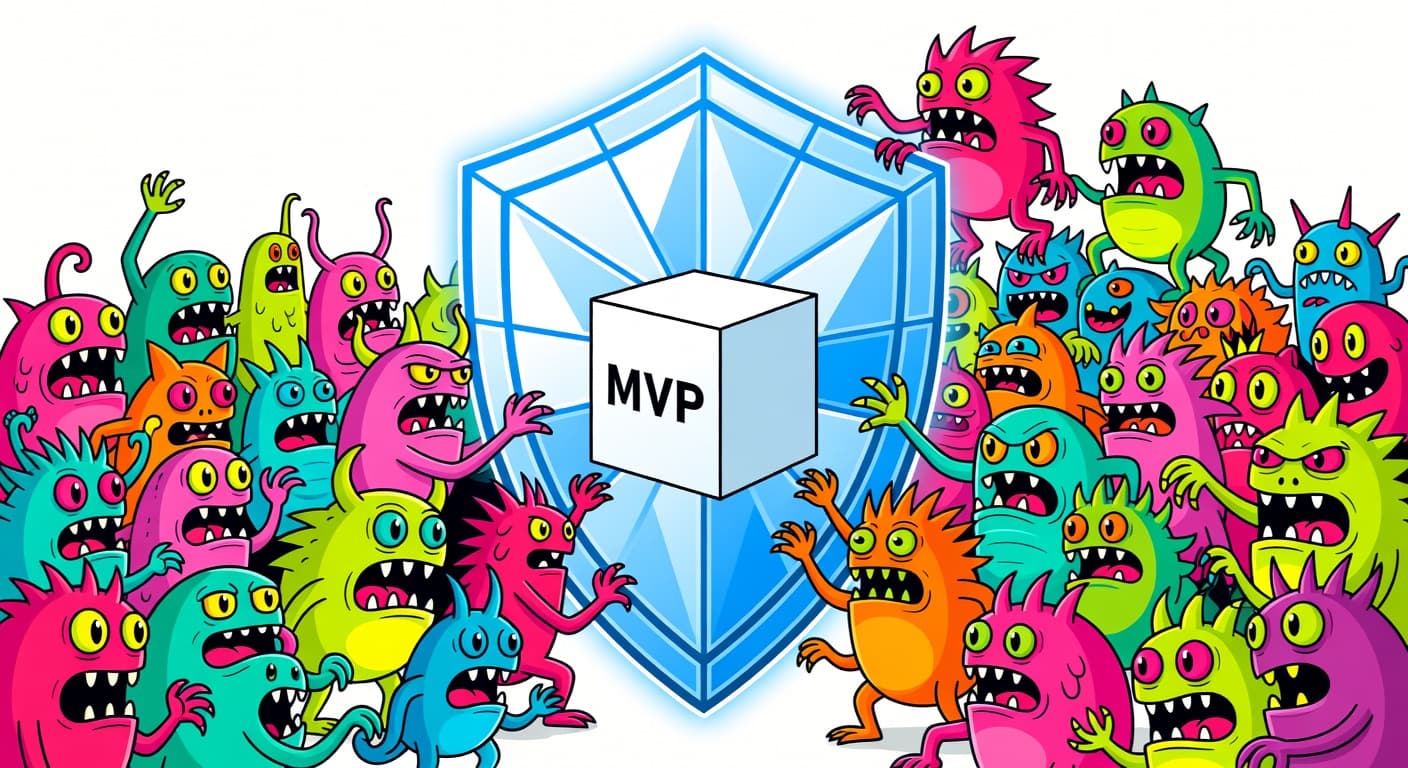
The 2024 Stack Overflow survey found that over 70% of developers experience burnout or overwhelm regularly. For solo builders without team support, that number is likely higher. Being a solo developer overwhelmed by too many projects isn't a personal failure. It has specific, structural causes.
Every open project drains mental energy. Each in-progress repo occupies a slot in your working memory. Even when you're not actively coding, your brain is tracking unfinished work across multiple projects. Research on the Zeigarnik effect shows that incomplete tasks occupy mental resources until resolved. Seven open projects means seven sources of background cognitive drain.
You have no triage system. New ideas go straight to active development without any filter. Old projects linger in purgatory because you never decided to kill them. Your project list only grows. It never shrinks.
Generic PM tools make it worse. Setting up a Trello board or Notion database to organize your overwhelm doesn't fix it. It reorganizes it. Now you have the same seven projects, just prettier. You spent two hours on setup instead of shipping.
When you're overwhelmed, the answer isn't better organization. It's a system that forces decisions. A solo developer overwhelmed by options needs fewer options, not better-organized ones.
The solo developer overwhelm audit
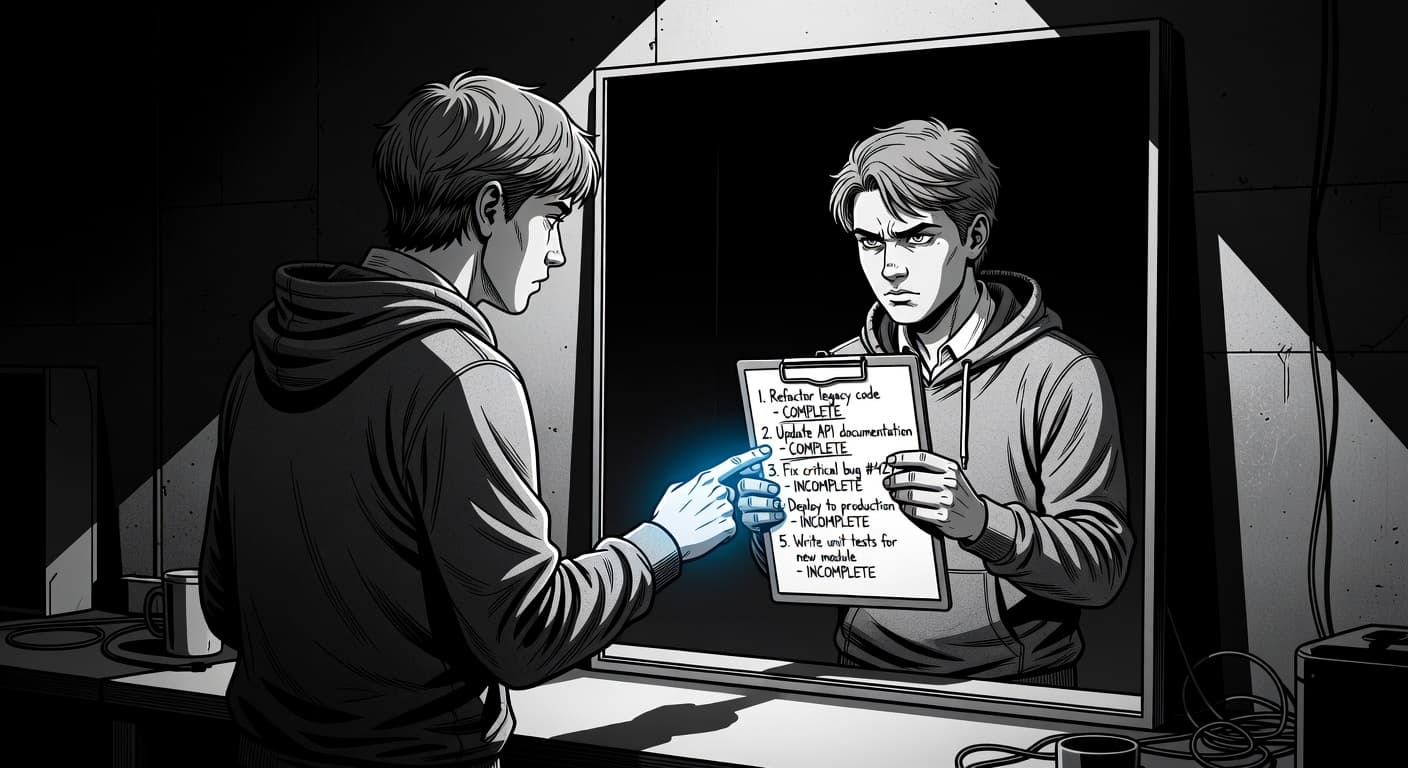
The fix starts with a brutal audit. This takes 15 minutes and it's the most productive thing you'll do this week.
Step 1: List every project, idea, and commitment.
Everything. Active repos, idea notes, half-written plans, projects you "meant to get back to." Write them all down. Don't organize. Just dump.
Step 2: Categorize each one as Ship, Kill, or Park.
- Ship: You could finish this in the next 2-4 weeks with focused effort. You still care about it. The scope is manageable.
- Kill: This project is dead. You lost interest, the market shifted, or the scope exploded beyond recovery. Stop pretending you'll get back to it.
- Park: The idea has potential but now isn't the time. Move it to your Idea Vault and stop thinking about it until you've shipped something else.
Step 3: Be honest. Most of them should be killed.
This is where it gets uncomfortable. If you have 10 projects, you probably need to kill 7 or 8 of them. Not "park." Not "revisit later." Kill. Remove them from your active mental load permanently.
Killing a project isn't failure. It's a decision. And a decision is always better than indefinite purgatory — which is where too many side projects end up.
The one-project rule
After your audit, you should have one project in the "Ship" category. Maybe two. Not four. One.
Work on exactly one project at a time.
This isn't optional advice. It's the single most impactful change you can make as a solo developer overwhelmed by too many commitments.
Context switching between projects destroys your productivity. Studies from the JetBrains Developer Ecosystem survey consistently show that focus time is the most valued and most scarce resource for developers. When you split that focus across three or four projects, each one gets a fraction of your best thinking.
One project. Full focus. Ship it or kill it. Then move on.
Reduce scope until it feels too small
If your one remaining project still overwhelms you, the scope is too big.
Cut features until you could ship in 2 weeks. Not 2 months. Not "when it's ready." 2 weeks.
That probably means cutting your 12-feature plan down to 5 features. Maybe 4. Cut until the project feels embarrassingly simple. That's the right size.
Overwhelm comes from the gap between where you are and where "done" is. When "done" is 15 features away, you feel overwhelmed. When "done" is 4 features away, you feel motivated. The work itself hasn't changed. The distance to the finish line has.
Scope Locking prevents your scope from growing back after you cut it. Because the first thing your brain will do after cutting scope is try to re-add the features you removed. Lock your scope so that decision requires a written justification recorded permanently in your Shame History.
Scope Locking isn't just a scope management tool. For a solo developer overwhelmed by project complexity, it's an anti-overwhelm tool.
Build an accountability system that doesn't add overhead
Here's the paradox: overwhelmed developers need systems. But they can't handle more setup, more configuration, more tools to learn and maintain.
The answer isn't a complex project management solution. It's the simplest possible system that provides structure without overhead.
One clear next action. Not a board with 30 cards. Not a backlog with 50 items. One thing to do right now. AI Next Action monitors your workspace and surfaces the single highest-priority action at any moment. No decision fatigue. No scanning a list wondering where to start.
Visible progress. Overwhelm thrives in darkness. When you can't see how far you've come, every day feels like you're standing still. Your Harbor shows what you've shipped. Ship Cards prove you're a builder who finishes things. That visibility matters more than any productivity hack.
Accountability without meetings. Solo developers have no natural accountability. No standups, no sprint reviews, no PM checking in. Shame History and your public unlock count create accountability that works without a team. Lightweight, permanent, and automatic.
A structured indie developer productivity system that matches your actual workflow beats any elaborate setup you won't maintain.
The hidden overhead of unfinished projects
Here's something nobody talks about when diagnosing developer overwhelm: unfinished projects don't just cost time when you work on them. They cost mental energy constantly, even when you're not touching them.
Every open project is a background process running in your head. You're subconsciously thinking about the auth system you left half-implemented. You feel guilty whenever you open GitHub and see that project with commits from two months ago. You mentally revisit the "good idea" you abandoned, wondering if you should pick it back up.
This background cognitive load is exhausting. And the more projects you have open, the heavier it gets.
The math is brutal. Five unfinished projects don't generate 5x the mental overhead of one. They generate closer to 15x. Because each project has its own technical context, its own unresolved decisions, its own emotional weight. Your brain can't fully let go of any of them.
The only way to reclaim that mental energy is to close the loops. Kill the projects that aren't worth finishing. Ship the one that is. A finished project — whether shipped or deliberately killed — costs zero background overhead. An "in progress" project costs indefinitely.
What to do when you can't decide what to kill
The hardest part of the overwhelm audit isn't the process. It's making decisions about projects you're emotionally attached to.
Here's a quick decision framework when you're stuck:
The "talk to a stranger" test. Can you explain why this project matters to a stranger in 30 seconds, and do they care? If the answer is "not really," that's a kill signal.
The "last commit" rule. If a project hasn't had a commit in 60 days, you've already abandoned it. You just haven't officially killed it yet. Make it official.
The "4-week ship" question. Could you ship an MVP of this project in 4 weeks if you committed fully? If no — either the scope is too big (cut it) or you don't care enough (kill it).
The "guilt vs excitement" check. When you think about this project, do you feel excited or guilty? Guilty means dead. Excited means maybe. But only one "excited" project survives.
The goal is to get from a list of 10 projects to 1 project. Every project you kill is one less background process draining your mental RAM.
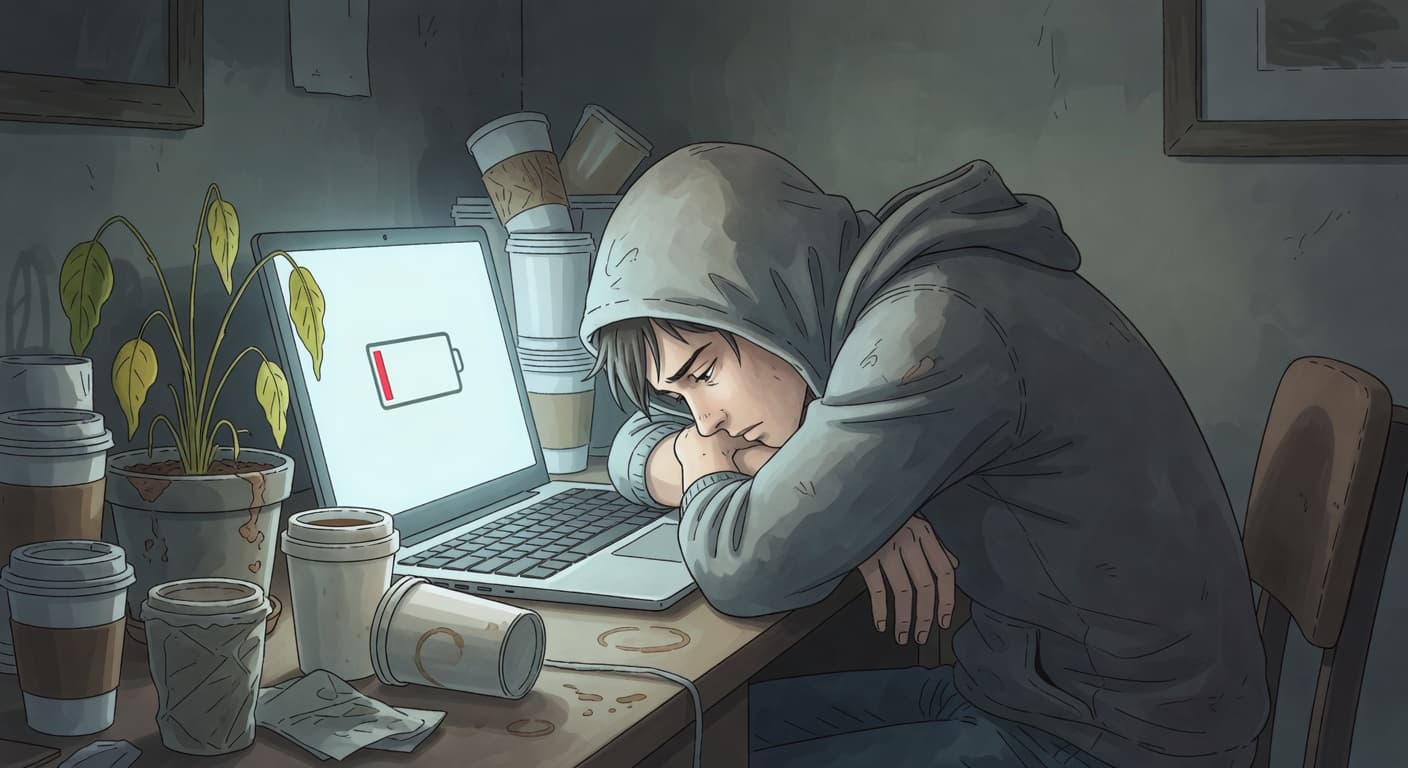
When overwhelm is burnout
Not every case of overwhelm is a system problem. Sometimes it's burnout.
The difference matters:
Overwhelm is "I have too much to do and no system to manage it." The fix is structural: triage, cut, focus, ship.
Burnout is "I don't care about any of this anymore and coding feels like a chore." The fix is rest, not restructuring.
Signs you might be burned out rather than overwhelmed:
- You used to love building things and now you dread it
- Reducing your project list to one project doesn't change how you feel
- You're exhausted even after sleeping well
- You've lost interest in projects you used to be excited about
If that's you, stop reading productivity advice and take a break. A real break. Close your laptop. Don't code. Don't read dev Twitter. Don't plan your next project.
Your projects will be there when you come back. And when you do come back, come back with a system — so you don't end up back here in 3 months.
Read more about recognizing and recovering from developer burnout.
Your recovery plan starts now
Here's your concrete action plan:
- Audit: List every project and idea you're carrying right now.
- Triage: Ship one, kill most, park the rest.
- Pick one: Commit to a single project for the next 2-4 weeks.
- Cut scope: Reduce features until shipping feels achievable, not daunting.
- Lock scope: Prevent re-expansion with Scope Locking.
- Ship: Push it live. Imperfect is fine. Done is the goal.
- Celebrate: Add it to your Harbor. Generate your Ship Card. You shipped.
The overwhelm isn't permanent. It's a symptom of a system that lets projects accumulate without forcing decisions. Fix the system and the overwhelm dissolves.
Prioritizing which projects survive the audit is its own skill — the feature prioritization guide for solo developers covers that in detail. For the deeper pattern of escape from scattered projects, escaping the side project graveyard goes further.
Start your recovery today with a system that replaces overwhelm with clarity. One project. One scope. One goal: ship.

Ready to ship your side project?
FoundStep helps indie developers validate ideas, lock scope, and actually finish what they start. Stop starting. Start finishing.
Get Started Free