Why Developers Never Finish Side Projects (And the System That Fixes It)

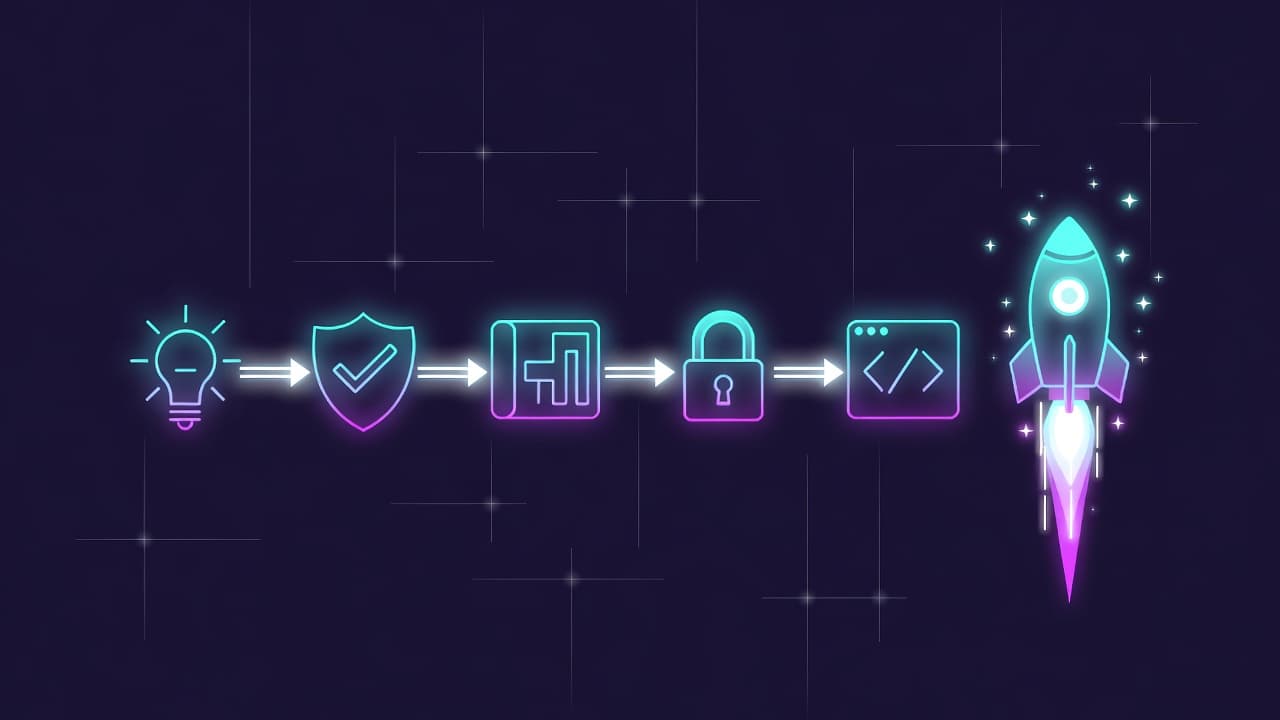
Developers don't have a motivation problem. They have a finishing problem.
Count your unfinished repos. Go ahead — open GitHub and count.
Seven? Twelve? Twenty? Whatever the number is, you already know the pattern. The idea hits. You get excited. You spin up a new project Friday night, hammer out code all weekend, maybe even push a commit or two the following week. Then something shifts. Work gets busy. Another idea pops up. The momentum disappears.
Three months later, the repo sits untouched with a README that says "Coming soon."
If you're wondering why developers never finish side projects, the answer isn't laziness. It's not a lack of motivation. And it's definitely not a talent problem. It's a system problem. Five system problems, to be exact. Each one is structural, each one is fixable, and not one of them gets solved by "just trying harder."
The 2024 Stack Overflow survey shows developers start far more projects than they finish. Threads on Hacker News about abandoned side projects consistently get hundreds of comments — developers recognizing themselves in the pattern.
I've been watching this pattern play out for years, in my own work and in dozens of conversations with other developers. The same five things kill projects over and over. Once you see them clearly, you can build systems around them. That's what actually works. Not willpower. Systems.
Reason 1: Scope Creep (But Not the Kind You Think)
When people talk about scope creep, they usually mean clients adding requirements or managers changing priorities mid-sprint. That's not the scope creep that kills side projects.
Your scope creep comes from you.
It starts innocently. You're building a budgeting app and you think, "users should probably be able to set recurring transactions." That's reasonable. Then you're in the middle of that and you realize you need a date picker component, and the ones available are ugly, so maybe you should build a custom one. Now you're building a date picker for your budgeting app that doesn't have a working budget page yet.
Two weeks later, you're deep in a notification system because recurring transactions need reminders, obviously. The original feature list has quietly tripled. You haven't noticed because there was never a written feature list to compare against. It was all in your head, and your head keeps saying yes to everything.
The fix isn't discipline. It's a locked scope. Write down your features before you build. Then make adding new features require effort and documentation. If adding a feature is as easy as having the thought, you'll add features constantly. If adding a feature means acknowledging the scope change, writing a reason, and having that reason recorded permanently, you'll think twice.
FoundStep's scope locking does this by freezing your feature list after planning. Every unlock requires a written justification that goes into your Shame History. You can still add features. It just costs you something.
Reason 2: No Idea Validation
Here's a question that will save you months of wasted time: does anyone actually want this?
Most developers skip this question entirely. They have an idea, it sounds good in their head, and they jump straight to implementation. Three months later they have a half-built product that solves a problem nobody has, or solves it in a way nobody wants.
Why do programmers start projects but never finish? Often because the project shouldn't have started in the first place. The idea wasn't validated. The problem wasn't confirmed. The target user was imaginary.
Validation doesn't mean building an MVP and seeing if anyone signs up. That's still building first. Validation means asking hard questions before you write any code. Who has this problem? How are they solving it now? Would they pay for something better? Can you actually build something better in a reasonable timeframe?
I'll be honest: validation is boring. It feels like bureaucracy when you just want to code. But skipping it is how you end up with a repo full of abandoned ideas that were never tested against reality. FoundStep has a 7-step validation framework that forces you to confront the viability question before you invest weeks of your life.
Reason 3: Zero Accountability
Teams have standups. Sprints have demos. Open source has contributors watching your commits. Solo side projects have... you, in your apartment, at midnight, with nobody knowing whether you shipped or abandoned.
This lack of accountability is the quiet killer. There's no cost to quitting. You don't have to tell anyone. There's no retrospective where you explain what happened. The project just fades out of your weekly routine, and a month later you stumble across the repo and feel a pang of guilt that fades by lunchtime.
Why do I never finish side projects? Because nothing happens when I don't. There's no consequence. No one is tracking whether I follow through. And without consequences, the path of least resistance is always to move on to the next interesting idea.
The fix is manufactured accountability. Some developers do this socially, by building in public on Twitter or committing to weekly updates with a friend. That works, but it's fragile. You can stop tweeting. You can cancel the check-in. You need accountability that you can't delete.
That's the idea behind Shame History. Every time you change your scope, break a commitment, or unlock something you locked, it's recorded permanently. Not to punish you. To make the cost of quitting visible. When you can see a trail of abandoned projects and broken scope locks, it changes how you approach the next one.
Reason 4: Shiny Object Syndrome
You're halfway through building a task manager. It's going fine. Then you read a Hacker News post about someone who built an AI-powered code review tool and made $5k in the first month. Suddenly the task manager feels boring. The code review tool sounds more exciting, more profitable, more fun. You "pause" the task manager and start a new repo.
You know how this ends. The code review tool will hit its own boring middle section in about three weeks, and by then you'll have read about someone else's success with a different kind of project, and the cycle repeats.
I keep abandoning side projects because every project has a boring middle, and new projects are always more exciting than the boring middle of the current one. This isn't a character flaw. It's how human brains work. Novelty triggers dopamine. Debugging a stubborn CSS layout issue for the fourth time does not.
The system-level fix is twofold. First, validate before building so you have confidence that the project is worth finishing even when it gets boring. Second, make the cost of switching visible. If your history shows that you've started and abandoned four projects in six months, each one getting about three weeks of work before you moved on, the pattern becomes hard to ignore.
FoundStep tracks this explicitly. Your project history shows what you shipped and what you abandoned. After the third abandoned project, most people get uncomfortable enough to actually finish the fourth.
Reason 5: Perfectionism Disguised as Quality
"I'm not ready to ship yet. The onboarding flow isn't smooth enough. The error handling is incomplete. I need to add tests for these edge cases. The landing page copy isn't right."
Perfectionism in solo development is sneaky because it sounds responsible. You're not procrastinating, you're "making sure it's ready." But ready for whom? You have zero users. Nobody is going to notice whether your error messages are slightly awkward or your loading spinner is the default browser one. They will notice if the product doesn't exist because you never shipped it.
Every week you spend polishing is a week you could spend learning from real users. And real user feedback is worth a hundred of your assumptions. That ugly error page you're embarrassed about? Your users won't see it because they'll take a different path through your app than the one you imagined. The feature you're obsessing over? They won't use it because they care about something you haven't built yet.
Perfectionism is fear wearing a productivity costume. You're not making the product better by delaying launch. You're protecting yourself from the possibility that nobody cares. And yes, that's a scary possibility. Ship anyway.
The practical fix: set a hard ship date and remove your ability to push it back. FoundStep enforces ship dates and tracks delays, making procrastination visible. But even without tooling, put a date on your calendar and tell someone about it. "I'm launching this on April 15th." Now there's a commitment. Now there's something to be accountable to.
Why do developers never finish side projects? The system is missing.
Every reason above comes down to the same thing: there's no system preventing the failure mode. Nothing stops scope creep. Nothing tests bad ideas before you spend months on them. Nothing tracks the projects that die silently. Nothing makes switching costly, and nothing forces a ship date.
The developers I know who actually ship things consistently aren't more talented or more disciplined. They've built constraints into their process. They lock scope. They validate ideas. They make their progress and failures visible. They set deadlines they can't quietly ignore.
Here's what that system needs to address:
- Validation before building. A checkpoint that asks "should I build this?" before you write code.
- Scope locking after planning. A mechanism that makes adding features painful and cutting features free.
- Visible accountability. A record of your decisions that you can't hide from.
- Sequential focus. One project, one phase at a time. Ship or kill before moving on.
- A real definition of done. Not "moved to the Done column." Done means shipped to users.
You can build these constraints yourself with spreadsheets and calendar reminders and a friend who checks in every week. Some people make that work. Most don't, because the constraints are voluntary and voluntary constraints dissolve the moment they're inconvenient.
That's why we built FoundStep. Not because developers need another project management tool. They need a system that won't let them repeat the same patterns that kill every side project. Scope locking, validation frameworks, permanent accountability history, and a shipped projects wall that only shows what you actually finished.
Where to go from here
If you're reading this and recognizing yourself in two or three of these patterns, that's normal. Most developers deal with all five. The question isn't whether you have these problems. It's whether you're going to build systems around them or keep hoping that next time will be different.
It won't be different. Not without structure.
Start with the easiest fix: write down your feature list for your current project and lock it. Put every new idea on a v1.1 list. Set a ship date. Tell someone about it.
And if you want a system that enforces all of this automatically, that's why FoundStep exists. It's opinionated on purpose. Because the reason you keep starting projects and never finishing them isn't talent, motivation, or time. It's the absence of constraints.

Ready to ship your side project?
FoundStep helps indie developers validate ideas, lock scope, and actually finish what they start. Stop starting. Start finishing.
Get Started Free